
The Mother in Mourning: Women’s Trauma and the Gothic Ghost in Susan Hill’s The Woman in Black
Şu kitabın bölümü:
Öztürk,
A.
S.
&
Tekşen,
İ.
(eds.)
2025.
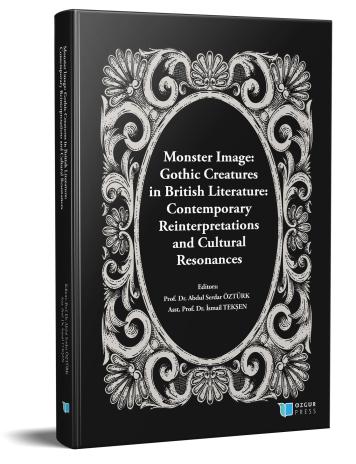
Monster Image: Gothic Creatures in British Literature Contemporary Reinterpretations and Cultural Resonances.
Özet
Susan Hill’s The Woman in Black (1983) reimagines the Gothic ghost story, transforming the traditional ghost into a contemporary symbol of female oppression, maternal grief, and haunting as resistance. In the novel, Jennet Humfrye, the “ghost mother” in black, emerges as a woman silenced by patriarchal norms, whose repressed suffering over the loss of her child returns in the form of ghostly revenge. Through the lens of trauma theory and feminist Gothic criticism, this chapter explores how Hill modernises the Gothic genre by combining psychological trauma with supernatural horror and creating a story where fear arises not only from the unknown but from emotional wounds that refuse to heal. As depicted in the narrative of Arthur Kipps and the oppressive setting of Eel Marsh House, the ghost’s maternal grief becomes both her power and her curse, turning affection into monstrosity and sorrow into ghostly resistance. This analysis displays how the “ghost mother” functions as a voice for the silenced woman and as a metaphor for repressed trauma in contemporary society. The chapter also touches upon the concerns about motherhood, women’s marginalisation, and the social pressures that continue to shape and intensify female suffering, showing how The Woman in Black still speaks to readers today as a powerful Gothic reflection on how trauma endures in both personal and collective memory.
Anahtar Kelimeler:
Kaynakça Gösterimi
Lisans

Bu çalışma Creative Commons Attribution-NonCommercial 4.0 International License ile lisanslanmıştır.
Yayın Tarihi
DOI
Kategoriler
Telif Hakkı (c) 2025 Abdul Serdar Öztürk- İsmail Tekşen; Ferhat Ordu- Murat Karakaş- Ali Kubat- Selma Parlakay Topbaş- Afranur Yılmaz- Gözde Begüm Mızrak- Ayça Gülünay- Mustafa Canlı- Asım Aydın- Abdullah Boyar- Gökhan Tugay Köksal- Zeliha Kuruducu- Ömer Özdemir- Nihal Topcu- Lokman Şehitoğlu- Tuba Aydan- İsmail Tekşen