
The Network of Cthulhu
Şu kitabın bölümü:
Öztürk,
A.
S.
&
Tekşen,
İ.
(eds.)
2025.
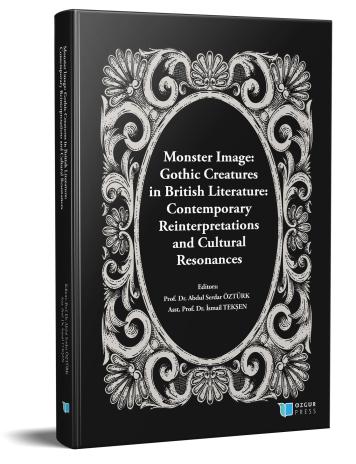
Monster Image: Gothic Creatures in British Literature Contemporary Reinterpretations and Cultural Resonances.
Özet
The Call of Cthulhu by H.P. Lovecraft, which shifts the focus of Gothic literature from the human to the cosmic, necessitates an analysis that transcends traditional interpretations of monsters. This study aims to add depth to horror literature by examining the Cthulhu mythos, by applying Pierre Bourdieu’s concepts of field and habitus, and Bruno Latour’s Actor-Network Theory. The study establishes an efficient dialogue between the text and social theory by analysing the concrete scenes in the story, such as Wilcox’s dreams, R’lyeh’s architecture and cult rituals. Through the swamp flower and sand snake metaphors, themes of the deceptive allure of knowledge and the inherent deceptive reality are explored. The study’s fundamental premise is that Cthulhu is not merely a monster, but an entity that destabilises human-constructed meaning (science, religion, art) and functions as an obligatory passage point in a network of non-human actors (sculpture, dreams). In this sense, how Cthulhu’s human centre fragments the world will be revealed through Bourdieu’s tools and Latour’s relational network analysis. Ultimately, it is argued that Cthulhu functions as a metaphor for the modern individual’s presence in the universe, a denial of his arrogance and confrontation with cosmic scarcity. This interdisciplinary approach positions Cthulhu as more than a monster, but a powerful metaphor for modern humans’ confrontation with cosmic insignificance. This study aims to bring Gothic literature research into an interdisciplinary dialogue with social theory.
Anahtar Kelimeler:
Kaynakça Gösterimi
Lisans

Bu çalışma Creative Commons Attribution-NonCommercial 4.0 International License ile lisanslanmıştır.
Yayın Tarihi
DOI
Kategoriler
Telif Hakkı (c) 2025 Abdul Serdar Öztürk- İsmail Tekşen; Ferhat Ordu- Murat Karakaş- Ali Kubat- Selma Parlakay Topbaş- Afranur Yılmaz- Gözde Begüm Mızrak- Ayça Gülünay- Mustafa Canlı- Asım Aydın- Abdullah Boyar- Gökhan Tugay Köksal- Zeliha Kuruducu- Ömer Özdemir- Nihal Topcu- Lokman Şehitoğlu- Tuba Aydan- İsmail Tekşen