
Artificial Intelligence–Driven Biochemical Diagnostic Systems: Methods, Clinical Applications, and Future Perspectives
Şu kitabın bölümü:
Meydan,
İ.
&
Özdek,
U.
(eds.)
2025.
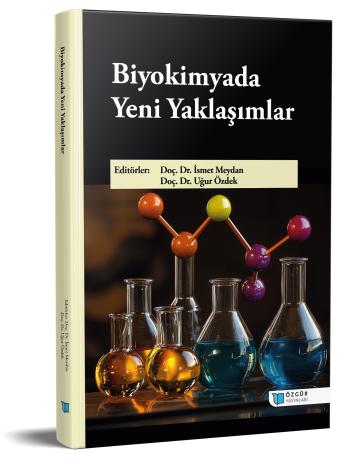
Biyokimyada Yeni Yaklaşımlar.
Özet
Recent advances in artificial intelligence (AI) have fundamentally transformed the landscape of biochemical diagnostics, enabling more comprehensive, accurate, and predictive interpretation of complex biological data. Traditional biochemical diagnostic approaches, which predominantly rely on single biomarkers or limited multivariate analyses, often fail to capture the nonlinear and multidimensional nature of biological systems. As a result, early disease detection, precise risk stratification, and personalized diagnostic assessment remain challenging in many clinical contexts.
This book chapter provides a comprehensive and critical overview of AI-driven biochemical diagnostic systems, emphasizing their theoretical foundations, methodological frameworks, and clinical applications. Core artificial intelligence concepts, including machine learning and deep learning architectures, are discussed in the context of biochemical data analysis, with particular attention given to feature engineering, model validation, and performance evaluation strategies. The chapter highlights how AI-based models enable the integration of high-dimensional biochemical datasets and facilitate the identification of complex molecular patterns that are not discernible through conventional analytical methods.
Disease-specific applications of AI-assisted biochemical diagnostics are systematically examined across major clinical domains, including cancer, metabolic disorders, cardiovascular diseases, neurodegenerative conditions, and infectious diseases. These sections illustrate how AI-enhanced multimarker panels, metabolomic and proteomic profiling, and immune-related biomarker analysis improve diagnostic sensitivity, specificity, and prognostic accuracy. Furthermore, the role of artificial intelligence in interpreting longitudinal biochemical data and supporting early disease detection and personalized monitoring is critically evaluated.
The chapter also explores the synergistic integration of AI with multi-omics data, emphasizing its importance for systems-level understanding of disease mechanisms and precision medicine. In addition, emerging AI-driven biosensor technologies, point-of-care diagnostic systems, and wearable biochemical monitoring platforms are discussed as key innovations expanding diagnostic capabilities beyond conventional laboratory settings. Ethical, regulatory, and clinical implementation challenges associated with AI-driven diagnostics are addressed to provide a balanced perspective on real-world applicability and sustainability.
Overall, this chapter underscores the transformative potential of artificial intelligence in biochemical diagnostics and highlights future directions for research and clinical translation. By bridging biochemistry, data science, and clinical practice, AI-driven diagnostic systems are positioned to play a central role in the evolution of predictive, preventive, and personalized medicine.
Anahtar Kelimeler:
Kaynakça Gösterimi
Lisans

Bu çalışma Creative Commons Attribution-NonCommercial 4.0 International License ile lisanslanmıştır.
Yayın Tarihi
DOI
Kategoriler
Telif Hakkı (c) 2025 İsmet Meydan- Uğur Özdek; Nuran Bazancir- Sema Kaptanoğlu- Fatma Calayır- Ali Rıza Kul- Adem Ahlatcı- Ahmet Ufuk Kömüroğlu