
Understanding Economic Growth in Türkiye Through Economic, Social and Environmental Indicators
Şu kitabın bölümü:
Bal,
H.
&
Ata,
A.
Y.
(eds.)
2025.
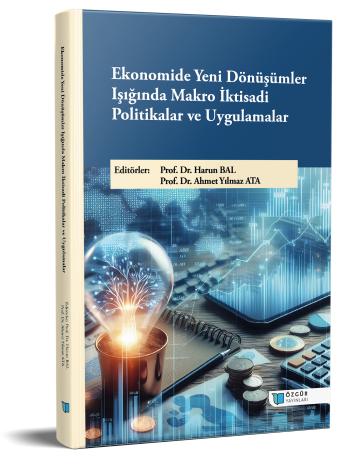
Ekonomide Yeni Dönüşümler Işığında Makro İktisadi Politikalar ve Uygulamalar.
Özet
Economic growth is among the fundamental objectives of a country's policymakers to ensure households live in prosperity. Therefore, certain social, economic, and environmental policies are established to achieve these objectives. To this end, the policies that Turkey will implement to raise living standards in a sustainable manner are of great importance. According to World Bank (2025), Türkiye is the 17th largest economy in the world as of 2024. Real GDP growth averaged 5.4% between 2002 and 2022, and per capita income (in real terms) doubled. Therefore, it is crucial to examine the factors affecting growth in Türkiye. This research examines the role of economic, social, and environmental factors affecting economic growth in Türkiye. Considering annual data covering the period 1990-2022, the relationships between variables were revealed using the Autoregressive Distributed Lag (ARDL) method. The results obtained estimated that the effects of fixed capital formation (GFCF), average years of schooling (ASE), and greenhouse gas emissions (GHG) on growth were positive. The impact of life expectancy (LE) on economic growth is found to be negative. The impact of labor force (LF) and average air temperature (AAT) on growth is found to be insignificant. These findings indicate that Türkiye’s sustainable growth policies need to address both production capacity and human and environmental factors in a balanced manner.
Anahtar Kelimeler:
Kaynakça Gösterimi
Lisans

Bu çalışma Creative Commons Attribution-NonCommercial 4.0 International License ile lisanslanmıştır.
Yayın Tarihi
DOI
Kategoriler
Telif Hakkı (c) 2025 Harun Bal- Ahmet Yılmaz Ata; Doğan Barak- Halim Tatlı- Fatih Akın- Ayşe Eryer- Rüya Ataklı Yavuz- Refika Görkem Yılmaztürk- Selen Savaşkan- İlknur Aşkın- Harun Bal- Koray Yıldırım- Esma Erdoğan- Süleyman Gürbüz- Nur Aydın- Ayşe Arı- Mehmet Ozan Akman- Bahadır Aybakan- Devran Deniz- Mustafa Orhan Özer- Gökhan Özkul- Özgenur Çakır Uysal- Tahsin Avcı- Emre Kılıç- Eren Ergen