
Do Outcome-Based Payments Fuel Cheating? An Experimental Study
Şu kitabın bölümü:
Polat,
M.
(ed.)
2025.
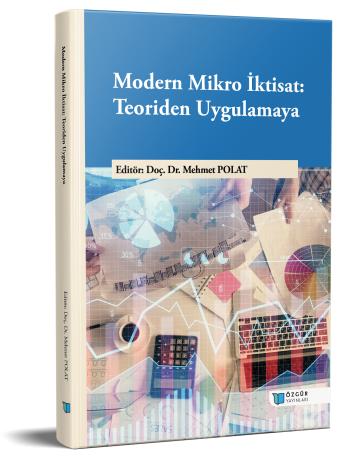
Modern Mikro İktisat: Teoriden Uygulamaya.
Özet
This study investigates cheating behavior among Muslim students on Ramadan’s first day compared to a non-Ramadan day, using Fischbacher and Föllmi-Heusi’s (2013) dice-rolling experiment, and examines perceptions of others’ cheating. Conducted at Istanbul University with 165 students (146 Muslims), the experiment was performed on Ramadan’s first day and a non-Ramadan day, with each participant receiving a six-sided die and a response sheet with instructions. Results, analyzed using ordered probit regression, show participants reported higher-paying dice outcomes during Ramadan, indicating increased cheating in this period. Additionally, most participants believed others would misreport results for higher payoffs. This suggests that awareness of unpunished cheating may increase cheating likelihood, potentially reducing trust in others. The homogeneous sample and simple religiosity measure limit generalizability. Future research could explore these dynamics using diverse samples, detailed religiosity measures, and religious priming methods.
Kaynakça Gösterimi
Lisans

Bu çalışma Creative Commons Attribution-NonCommercial 4.0 International License ile lisanslanmıştır.
Yayın Tarihi
DOI
Kategoriler
Telif Hakkı (c) 2025 Mehmet Polat; Semra Koçak- Mehmet Polat- Cemal Öztürk- Muhammed Genç- Hatime Kamilçelebi- Dilek Alma Savaş- Muhammed İkbal Tepeler- Murat Özdemir- Özcan Özkan- Mustafa Özer- Demet Topal Koç