
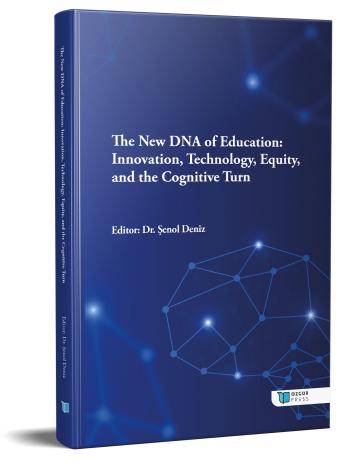
AI, Ethical Stress, and Emotional Labor in Educational Leadership: Toward a Human-Centered Framework
Şu kitabın bölümü:
Deniz,
Ş.
(ed.)
2025.
The New DNA of Education: Innovation, Technology, Equity, and the Cognitive Turn.
Özet
Artificial intelligence (AI) is rapidly transforming the cognitive, ethical, and emotional landscape of educational leadership. While research has extensively examined AI’s pedagogical, technical, and governance implications, far less is known about how AI-mediated decision-making reshapes the emotional labor, ethical stress, and psychological well-being of school leaders. This chapter addresses this critical gap by conceptualizing the psychosocial demands that emerge when algorithmic systems interact with human judgment in school administration. Drawing on emotional labor theory (Hochschild, 1983; Grandey, 2000), moral distress scholarship (Jameton, 1984; Friese, 2019), human-centered AI ethics (UNESCO, 2021; Floridi & Cowls, 2019), and the Job Demands–Resources model (Bakker & Demerouti, 2007), the chapter demonstrates that AI introduces a distinctive constellation of pressures for educational leaders. These include tensions between algorithmic recommendations and professional expertise, heightened accountability for opaque system outputs, increased emotional mediation due to teacher and parent anxieties about surveillance and fairness, and escalating cognitive load resulting from constant data flows and real-time decision environments. Together, these dynamics produce new forms of ethical stress, emotional strain, identity disruption, and burnout risk. To respond to these emerging challenges, the chapter proposes a Human-Centered AI–Leadership Framework comprising three interconnected components: (1) an ethical–emotional awareness layer for identifying sources of moral and emotional strain; (2) a human–AI co-decision layer that integrates explainability, collective interpretation, and professional judgment; and (3) a resilience and well-being layer designed to protect leaders’ psychological resources and relational integrity. Grounded in global AI ethics guidelines and contemporary leadership theory, this framework provides a pathway for responsible AI adoption that centers human values, moral agency, and emotional sustainability. By illuminating the hidden emotional and ethical burdens of AI-integrated leadership, the chapter advances a new agenda for research and practice, arguing that the long-term success of AI in education depends not only on technological sophistication but on safeguarding the well-being, dignity, and ethical capacity of those who lead.
Anahtar Kelimeler:
Kaynakça Gösterimi
Lisans

Bu çalışma Creative Commons Attribution-NonCommercial 4.0 International License ile lisanslanmıştır.
Yayın Tarihi
DOI
Kategoriler
Telif Hakkı (c) 2025 Şenol Deniz; Canan Battal- Şemseddin Gündüz- Okyanus Işık Seda Yılmaz- Gizem Şahin- Fatma Sümeyye Uçak- Tuğba Horzum