
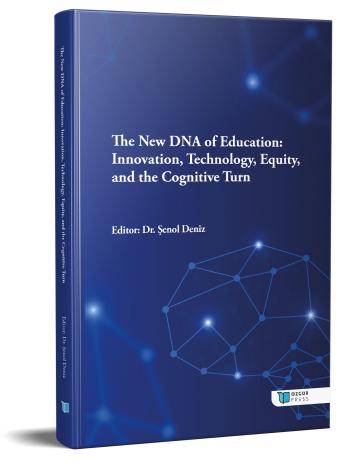
Examples of Innovative Science Education Practices in the Future Classrooms
Şu kitabın bölümü:
Deniz,
Ş.
(ed.)
2025.
The New DNA of Education: Innovation, Technology, Equity, and the Cognitive Turn.
Özet
This book chapter addresses technology integration for innovative learning in future science classrooms. 21st-century science education aims not only for students to acquire conceptual knowledge, but also to develop higher-order skills such as scientific thinking, critical thinking, creativity, and digital literacy. The chapter examines the role and impact of technology-enhanced learning environments in science education. The applications of physical and digital tools in science education have been addressed through topics such as Arduino for experimental learning, 3D printers for modelling and production, laser cutting machines for precision prototyping and production, VEX IQ robotics kits for robotics and engineering implementations, PhET simulations for virtual experiences, Scratch for coding and modelling, Canva for visual communication, Kahoot! for formative assessment, and artificial intelligence for personalised learning experiences. Each technology is examined in terms of its contribution to learning experiences within the context of a student-centred learning perspective, and examples of classroom applications are provided. Consequently, future science classrooms will offer students the opportunity to experience scientific concepts in concrete contexts and develop 21st-century skills by integrating different technologies within a holistic ecosystem. The tools discussed in this study are examples, and the main point emphasised is the transformation that technologies create in learning processes. While organizations and individuals that effectively integrate technology gain an advantage, those unable to do so may remain at a disadvantage, and difficulties in accessing some technologies may further deepen existing technological and digital inequalities. Accordingly, infrastructure, financial support, and pedagogical guidance emerge as critical requirements.
Anahtar Kelimeler:
Kaynakça Gösterimi
Lisans

Bu çalışma Creative Commons Attribution-NonCommercial 4.0 International License ile lisanslanmıştır.
Yayın Tarihi
DOI
Kategoriler
Telif Hakkı (c) 2025 Şenol Deniz; Canan Battal- Şemseddin Gündüz- Okyanus Işık Seda Yılmaz- Gizem Şahin- Fatma Sümeyye Uçak- Tuğba Horzum