
Democratic Leadership
Şu kitabın bölümü:
Oktaysoy,
O.
&
Elkırmış,
Ö.
(eds.)
2025.
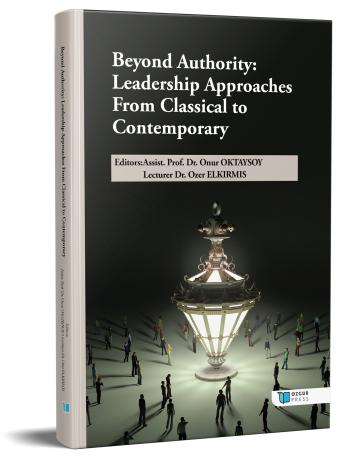
Beyond Authority: Leadership Approaches From Classical to Contemporary.
Özet
This study examines the democratic leadership approach, which has been one of the most fundamental issues in the leadership literature in the past. Democratic leadership is a leadership style that ensures the active participation of employees in decision-making processes and is based on mutual trust and cooperation within the organization. One of the most prominent features of this leadership style is that it takes into account the views of employees instead of making decisions based on the leader's authority or power sources. Democratic leadership not only increases participation in decisions and expands their quality, but also strengthens the satisfaction, motivation, trust, and loyalty of employees within the organization. Especially when the literature is examined, findings that democratic leadership increases innovative and creative behaviors and strengthens organizational citizenship behaviors stand out. The main reason for this can be said to be making employees feel valuable by prioritizing the concept of democracy, which is at the core of democratic leadership. Although democratic leadership is a leadership style that emerged in the past, it has overlapping aspects with many modern leadership styles. In particular, it has similar characteristics to transformational, ethical, and servant leadership. Democratic leadership is a leadership style that prioritizes participation, ethical values, transparency, and cooperation, and is considered an important approach that can contribute to the strong presence of organizations in today's rapidly changing and competitive business world.
Anahtar Kelimeler:
Kaynakça Gösterimi
Lisans

Bu çalışma Creative Commons Attribution-NonCommercial 4.0 International License ile lisanslanmıştır.
Yayın Tarihi
DOI
Kategoriler
Telif Hakkı (c) 2025 Onur Oktaysoy- Özer Elkırmış; Erdogan Kaygın- Mustafa Altıntaş- Mehmet Selman Kobanoğlu- Ali Bayram- Selen Uygungil-Erdoğan- Yaşar Şahin- Burcu Turan Torun- Ethem Topçuoğlu- Erdi Bozkır- Talip Bektaş- Vurgun Topçuoğlu- Serdal Özkes- Onur Oktaysoy- Özer Elkırmış- M. Akif Yenikaya- Ebru Uluçay Bektaş- Bilal Kobanoğlu- Mahmut Özdemirkol