
Entrepreneurial Leadership
Şu kitabın bölümü:
Oktaysoy,
O.
&
Elkırmış,
Ö.
(eds.)
2025.
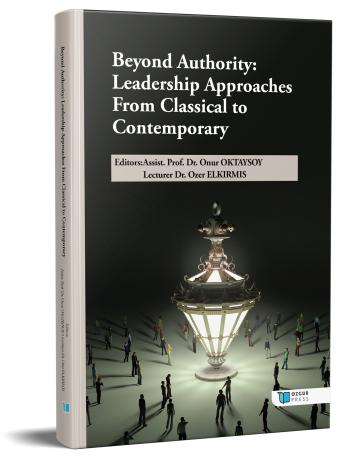
Beyond Authority: Leadership Approaches From Classical to Contemporary.
Özet
Since the early 21st century, there have been many changes in social relations, economics, technology, and information flow, which have led to radical changes in the concept of leadership. While leadership models were generally based on stability and control, the rapid changes in today's world have forced the business world to go beyond this idea. One of the leadership types that emerged with this necessity was entrepreneurial leadership. Entrepreneurial leadership aims to lead organizations to success in their internal and external environments by emphasizing risk-taking, opportunity creation, and vision development (Renko et al., 2015). While the aim of traditional leadership is to manage the existing order in the most effective and efficient way, entrepreneurial leadership is an idea that questions the existing order, produces values, and transforms these values into environmental and social benefits (Kuratko, 2007). In this context, entrepreneurial leaders have not only been people who manage organizations, but also pioneers of change and development (Gupta et al., 2002). Entrepreneurial leadership, which is defined as a leadership that evaluates and directs the environmental factors required by our age, gathers employees within the framework of organizational goals, and encourages them to innovate, has become an indispensable element for enterprises that want to ensure their continuity in this environment of digitalization, transformation, and innovation-oriented competition in today's world (Akça, 2020).
Anahtar Kelimeler:
Kaynakça Gösterimi
Lisans

Bu çalışma Creative Commons Attribution-NonCommercial 4.0 International License ile lisanslanmıştır.
Yayın Tarihi
DOI
Kategoriler
Telif Hakkı (c) 2025 Onur Oktaysoy- Özer Elkırmış; Erdogan Kaygın- Mustafa Altıntaş- Mehmet Selman Kobanoğlu- Ali Bayram- Selen Uygungil-Erdoğan- Yaşar Şahin- Burcu Turan Torun- Ethem Topçuoğlu- Erdi Bozkır- Talip Bektaş- Vurgun Topçuoğlu- Serdal Özkes- Onur Oktaysoy- Özer Elkırmış- M. Akif Yenikaya- Ebru Uluçay Bektaş- Bilal Kobanoğlu- Mahmut Özdemirkol