
Remote Leadership
Şu kitabın bölümü:
Oktaysoy,
O.
&
Elkırmış,
Ö.
(eds.)
2025.
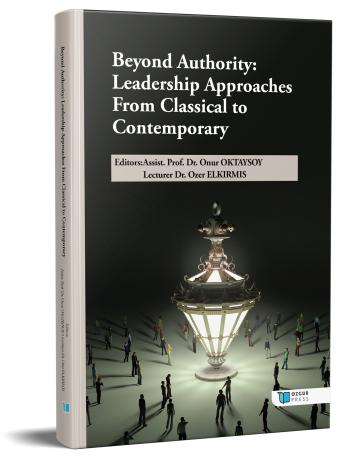
Beyond Authority: Leadership Approaches From Classical to Contemporary.
Özet
Remote leadership is a leadership approach that enables teams to be managed effectively in environments where they are not physically present in the same place. The acceleration of digitalization, the proliferation of flexible working models, and the globalizing business world are increasing the importance of remote leadership. This leadership model requires not only the use of technology but also multidimensional skills such as effective communication, trust building, motivation, performance management, cultural awareness, and flexibility. The main challenges faced by remote leaders include communication breakdowns, lack of motivation, work-life balance problems, and barriers to collaboration in a virtual environment. To overcome these challenges, successful remote leaders must establish regular and transparent communication, create an environment of trust, use technology strategically, and develop approaches that address the individual needs of employees. In addition, cultural diversity and inclusion are important dimensions for effective management of virtual teams. In the future, remote leadership will be transformed by the integration of technologies such as artificial intelligence, virtual and augmented reality, making leaders' agile, flexible, and technology-oriented skills even more important. Employee experience and well-being will become a key factor for leaders to consider in their strategic decision-making. Indeed, remote leadership is emerging as a permanent and strategic leadership model in the modern business world, requiring both individual leadership competencies and organizational processes to be adaptive, flexible, and inclusive. This approach is critical for enhancing team performance, strengthening employee engagement, and ensuring sustainable success in digital business environments.
Anahtar Kelimeler:
Kaynakça Gösterimi
Lisans

Bu çalışma Creative Commons Attribution-NonCommercial 4.0 International License ile lisanslanmıştır.
Yayın Tarihi
DOI
Kategoriler
Telif Hakkı (c) 2025 Onur Oktaysoy- Özer Elkırmış; Erdogan Kaygın- Mustafa Altıntaş- Mehmet Selman Kobanoğlu- Ali Bayram- Selen Uygungil-Erdoğan- Yaşar Şahin- Burcu Turan Torun- Ethem Topçuoğlu- Erdi Bozkır- Talip Bektaş- Vurgun Topçuoğlu- Serdal Özkes- Onur Oktaysoy- Özer Elkırmış- M. Akif Yenikaya- Ebru Uluçay Bektaş- Bilal Kobanoğlu- Mahmut Özdemirkol