
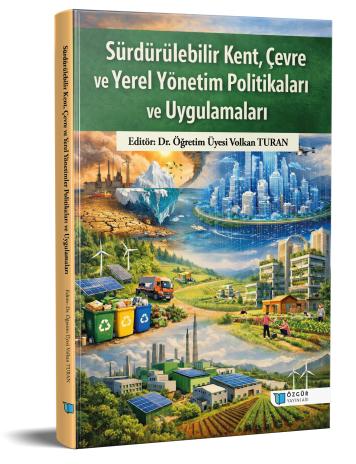
Regional Climate Dynamics and Agricultural Vulnerability in California: A Multi-County Analysis of Long-Term Temperature and Precipitation Trends
Şu kitabın bölümü:
Turan,
V.
(ed.)
2025.
Sürdürülebilir Kent, Çevre ve Yerel Yönetimler Politikaları ve Uygulamaları.
Özet
Climate variability is now an environmental challenge in the high agricultural production climates of places such as California where the availability of water and climate extremes intersect with a specialized cropping system. The following chapter gives a general analysis of the temporal trends of temperature and precipitation in selected California counties (Fresno, Kern, Kings, Madera, Sacramento, San Joaquin, Santa Barbara, and Santa Cruz) according to annual climate data that were available for this study. The aims are to determine how regional climatic trends might impact agricultural systems, water availability, and long-term resilience. The literature review underscores the growing rate of heat extremes, decreasing snowpack, and increasing interannual rainfall variability across California (Diffenbaugh & Burke, 2019; Pierce et al., 2018). These issues in combination are straining crop production, irrigation needs and groundwater resource capabilities. Descriptive trends and comparisons across inland as well as coastal counties make up the methodological approach. Preliminary results indicate that the increase in temperature is more pronounced in inland Central Valley counties, while the warming is more striking in coastal counties, is less pronounced with more mild warming still observed. All regions seem to experience greater variations in precipitation suggesting a statewide transition to more erratic hydrologic rhythms. These findings are consistent with general climate projections that are suggesting increasing climatic instability. The chapter concludes with the considerations for agricultural planning arising from these changes that stress its importance for water use, crop choice and regional approaches to adapt management.
Anahtar Kelimeler:
Kaynakça Gösterimi
Lisans

Bu çalışma Creative Commons Attribution-NonCommercial 4.0 International License ile lisanslanmıştır.
Yayın Tarihi
DOI
Kategoriler
Telif Hakkı (c) 2025 Volkan Turan; Bilge Villi- A. Selçuk Köylüoğlu- Hale Girşen- Şermin Atak Çobanoğlu- Murat Küçükşen- Ceyda Kükrer Mutlu- Orhan Şahin- Bülent Bayrak- Eray Aktepe- Gülseren Günaydın- Serhat Saatci