
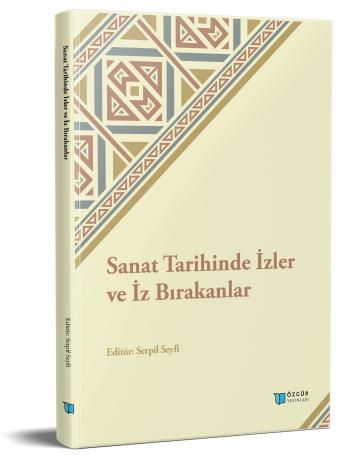
A Study On The Handicrafts Featured In The “Surnâme-i Humayun Of Murad III”
Şu kitabın bölümü:
Seyfi,
S.
(ed.)
2025.
Sanat Tarihinde İzler ve İz Bırakanlar.
Özet
This study aims to examine the Ottoman handicrafts depicted in the miniatures of the Surnâme-i Hümâyun, which recounts the magnificent circumcision celebration organized by Murad III for Prince Mehmed in 1582. The main objective of the study is to reveal 16th-century Ottoman art production, artisan culture, and relations between court and non-court craftsmen by evaluating the handicraft products depicted in the miniatures in terms of material, technique, motifs, color principles, and composition. Within this framework, examples related to book art, weaving, metalwork, woodwork, ceramic-tile work, and glass art have been examined.
The study employs qualitative, descriptive, and iconographic–iconological analysis methods. The miniatures were first analyzed descriptively, and then interpreted through iconographic methods specific to art history in order to examine symbols, spatial arrangements, and the functions of the depicted scenes. Nurhan Atasoy’s work, 1582 Surnâme-i Hümâyun: Celebretion Book (The Imperial Surnâme: Wedding Book), together with other literature on the handicrafts of the period, formed a comparative framework for the analysis.
The findings reveal that the Surnâme miniatures are not merely a festive narrative, but also provide rich data on Ottoman production technology, artisan organization, and material culture. Details such as the weaving looms, goldsmith and coppersmith tools, glassmakers' furnace equipment, and carpenters' tools featured in the guild processions reveal the high level of craftsmanship of the period.
The study reveals that the Surnâme-i Hümayun is a unique source documenting the technical capacity, aesthetic tendencies, and social status of 16th-century Ottoman crafts. In this context, a research output on the crafts in the Surnâme of Murad III will be presented, detailing the work's contribution to Ottoman visual culture and art history literature. Thus, the study aims to shed light on both the value of this rare work and the craft universe of the period.
Anahtar Kelimeler:
Kaynakça Gösterimi
Lisans

Bu çalışma Creative Commons Attribution-NonCommercial 4.0 International License ile lisanslanmıştır.
Yayın Tarihi
DOI
Kategoriler
Telif Hakkı (c) 2025 Serpil Seyfi; Demet Okuyucu- Aygül Uçar- Zeynep Özkan Tekneci- Hasan Uçar- Büşra Ayaz Buladı- Mücahit Gündoğan- Ahmet Ali Bayhan- Özgül Yıldırım Güneş