
Teaching Practices of Instructors in Abstract Algebra
Şu kitabın bölümü:
Deniz,
Ş.
(ed.)
2025.
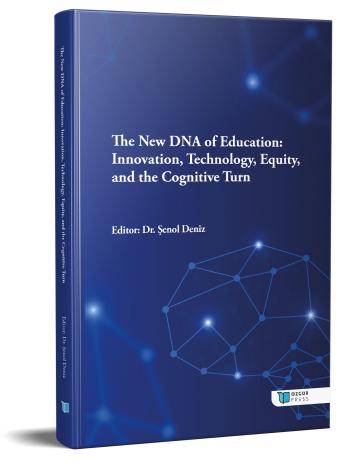
The New DNA of Education: Innovation, Technology, Equity, and the Cognitive Turn.
Özet
Teaching abstract algebra presents considerable challenges owing to its theoretical nature, necessitating a balance between conceptual understanding and effective teaching strategies. Students frequently encounter difficulties with abstraction, which is essential in mathematics education. Consequently, instructors are required to implement targeted teaching strategies to improve understanding. This study examines the teaching practices of instructors in teaching abstract algebra, emphasizing their approaches to addressing student challenges, organizing content, and employing assessment strategies to enhance learning outcomes. This study investigates the teaching practices utilized by university instructors in Türkiye to facilitate abstract algebra learning. It focuses on the ways in which instructors modify their teaching approaches to meet students’ needs, organize course content, and incorporate assessment methods to improve conceptual understanding, as well as their strategies for utilizing and developing abstract algebra curricula. A qualitative case study methodology was utilized, incorporating semi-structured interviews with four university instructors. Thematic content analysis was employed to classify data according to essential components of pedagogical content knowledge, such as student understanding, content knowledge, teaching methods, assessment strategies, and curriculum knowledge. The results demonstrate that instructors primarily employ lecture-based methods, augmented by question-and-answer techniques and organized examples. Emphasis is placed on conceptual connections and assessments of prior knowledge to address student misconceptions. Instructors identify curriculum limitations, such as inadequate course hours, which restrict comprehensive engagement with abstract concepts. Assessment strategies emphasize the identification of misconceptions via targeted questioning and open-ended problem-solving tasks. This study enhances pedagogical discourse on abstract algebra by examining how instructors utilize pedagogical content knowledge to tackle student challenges. This underscores the necessity for alternative pedagogical approaches, including interactive learning and the integration of technology, to enhance comprehension. The study offers insights into improving abstract algebra instruction, recommending curriculum modifications, varied teaching strategies, and assessment techniques that foster deeper learning. The results can guide faculty development initiatives focused on enhancing abstract algebra teaching methods.
Anahtar Kelimeler:
Kaynakça Gösterimi
Lisans

Bu çalışma Creative Commons Attribution-NonCommercial 4.0 International License ile lisanslanmıştır.
Yayın Tarihi
DOI
Kategoriler
Telif Hakkı (c) 2025 Şenol Deniz; Canan Battal- Şemseddin Gündüz- Okyanus Işık Seda Yılmaz- Gizem Şahin- Fatma Sümeyye Uçak- Tuğba Horzum