
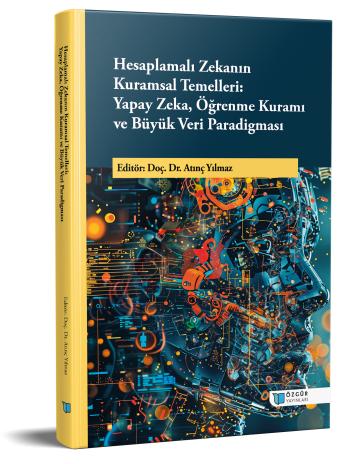
Artificial Intelligence-Based Cyberbullying Detection and Prevention: Deep Learning Architectures, Multimodal Analysis, Ethical Challenges, and Future
Şu kitabın bölümü:
Yılmaz,
A.
(ed.)
2026.
Hesaplamalı Zekanın Kuramsal Temelleri: Yapay Zeka, Öğrenme Kuramı ve Büyük Veri Paradigması.
Özet
The rapid growth of social media and digital communication platforms has significantly increased the prevalence of cyberbullying, online harassment, and hate speech. Due to the large volume and dynamic nature of online content, manual monitoring has become insufficient, leading to the growing use of artificial intelligence (AI)-based detection and prevention systems. Cyberbullying is not only a technical problem but also a major social and psychological challenge with serious consequences for individuals and online communities.
This paper presents a comprehensive review of AI-based cyberbullying detection approaches, focusing on machine learning, deep learning, and multimodal analysis techniques. The study examines traditional machine learning methods alongside advanced deep learning architectures such as CNN, RNN, LSTM, hybrid CNN–LSTM models, and transformer-based models including BERT. In addition, the paper discusses multimodal systems that combine textual, visual, and sentiment-based analysis to improve the detection of implicit and complex harmful content.
The study also addresses important challenges such as adversarial attacks, linguistic manipulation, dataset imbalance, algorithmic bias, privacy concerns, and ethical issues related to automated moderation systems. Furthermore, future directions involving explainable AI, predictive moderation systems, and human–AI collaborative frameworks are explored.
The findings indicate that although AI-based systems have significantly improved cyberbullying detection performance, achieving a balance between technical accuracy, fairness, transparency, and freedom of expression remains a major challenge. Future progress in this field will require interdisciplinary approaches that integrate advanced AI technologies with ethical and humancentered moderation strategies.
Anahtar Kelimeler:
Kaynakça Gösterimi
Lisans

Bu çalışma Creative Commons Attribution-NonCommercial 4.0 International License ile lisanslanmıştır.
Yayın Tarihi
DOI
Kategoriler
Telif Hakkı (c) 2026 Atınç Yılmaz; Sara Naghib Zadeh- Zühre Aydın- Hatice Nur Gök- Cansu Arslan- Uygar Aydın- İnci Zaim Gökbay- Mehmet Dinçer Erbaş- Kenan Peker- Gökhan Önder Ergüven- Tevfik Erdal Baylay- Atınç Yılmaz