
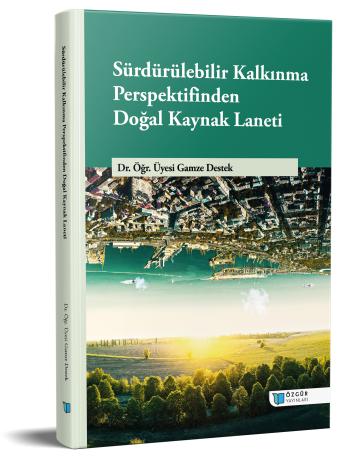
The Natural Resource Curse From the Perspective of Sustainable Development
Synopsis
This study investigates the validity of the Natural Resource Curse Theory, which expresses the negative effects of natural resource abundance on economic growth, and possible solutions to this problem for resource-rich countries. Unlike the widespread literature centered on economic growth, the study utilized the sustainable development index, which covers all economic, environmental and social development indicators of countries. In this context, the effect of natural resources on the sustainable development index was analyzed using second-generation panel data techniques by using data from the period 1990-2019 for 22 resource-rich countries. In addition, physical capital accumulation, human capital and financial development index were also included in the model as independent variables in order not to cause omitted variable error. Three separate models were used in the study. While the validity of the theory in question was tested in the first model, the factors that produced solutions to the problem in question were tried to be determined through interaction terms based on financial development and human capital, respectively, in the second and third models. According to the findings, natural resource dependency negatively affected sustainable development in both the short and long term. Therefore, the validity of the Natural Resource Curse Theory was also determined through the sustainable development indicator. Similarly, it has been found that the effect of physical capital accumulation on sustainable development is negative. Finally, according to the findings based on interaction terms, it has been proven that human capital and financial development have positive effects on turning the negative effect of natural resource dependency on sustainable development into positive.
How to cite this book
License

This work is licensed under a Creative Commons Attribution-NonCommercial 4.0 International License.
Published
ISBN
DOI
Statistics
Categories
Copyright (c) 2025 Gamze Destek