
Definition, Purpose and Importance of Hearing Screening Programs
Chapter from the book:
Kandazoğlu Erdem,
M.
&
Erdal,
S.
&
Karabudak,
B.
(eds.)
2025.
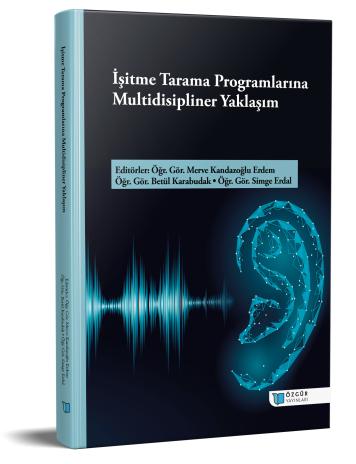
Multidisciplinary Approach to Hearing Screening Programs.
Synopsis
Hearing loss is defined as a global public health concern, currently affecting 1.5 billion people, and projected to reach 2.5 billion by 2050. The WHO recognizes early diagnosis and intervention as a fundamental health right and positions hearing screening as a rapid and cost-effective assessment method that detects asymptomatic losses early. The primary goal of hearing screening is to accelerate the diagnosis-confirmation and intervention chain by detecting hearing loss at an early stage. Studies show that children with hearing loss who receive intervention before six months of age can catch up with their peers in language development. In adults and the elderly, screening is critically important for preventing cognitive decline, which, if left untreated, can increase the risk of social isolation, depression, and particularly dementia by 8%. National hearing screening programs implemented in Turkey for newborns and school-age children have achieved significant success in meeting the WHO's 95% coverage target. However, the scope of screening should not be limited only to "detection" but should aim to systematically link individuals to appropriate rehabilitation (hearing aids, cochlear implants, etc.), educational support, and monitoring services. Given the economic and social burden of hearing loss, which exceeds $981 billion USD annually, hearing screening is a strategic priority for societal well-being and health equity. In line with sustainable development goals, it is important to expand holistic national policies based on interdisciplinary cooperation and supported by robust data systems within the scope of preventive health services.
How to cite this book
License

This work is licensed under a Creative Commons Attribution-NonCommercial 4.0 International License.
Published
DOI
Categories
Copyright (c) 2025 Merve Kandazoğlu Erdem- Simge Erdal- Betül Karabudak; Tuğba Ural- Merve Kandazoğlu Erdem- Simge Erdal- Esra Kuru- Betül Karabudak- Esra Sarlık- Büşra Nehir Şahin