
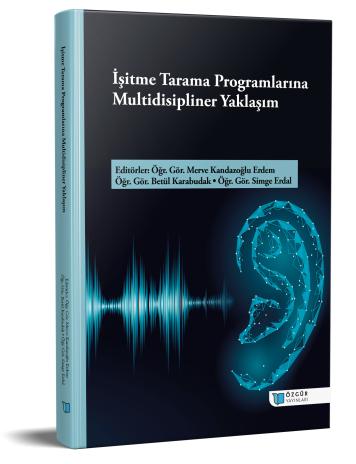
Audiological Devices Used in Hearing Screening Programs
Chapter from the book:
Kandazoğlu Erdem,
M.
&
Erdal,
S.
&
Karabudak,
B.
(eds.)
2025.
Multidisciplinary Approach to Hearing Screening Programs.
Synopsis
Hearing constitutes a fundamental sensory input directly linked to brain plasticity during the early years of life, and auditory stimulation provided in this critical period shapes the neurobiological basis of language, communication, and cognitive development. Hearing screening tests are essential clinical procedures that enable rapid, objective, and reliable assessment of auditory function across all age groups. By facilitating the early detection of hearing loss, these tests enhance the effectiveness of diagnostic and intervention processes. This continuum has advanced significantly through the contributions of biomedical engineering. Contemporary audiological screening systems operate through the integration of multidimensional components of biomedical engineering, including advanced sensor technologies, low-noise analog circuit designs, high-resolution analog-to-digital converters, digital signal processing algorithms, and embedded system architectures. This technological infrastructure provides a critical foundation that enhances both the repeatability and the clinical accuracy of the measurements.
How to cite this book
License

This work is licensed under a Creative Commons Attribution-NonCommercial 4.0 International License.
Published
DOI
Categories
Copyright (c) 2025 Merve Kandazoğlu Erdem- Simge Erdal- Betül Karabudak; Tuğba Ural- Merve Kandazoğlu Erdem- Simge Erdal- Esra Kuru- Betül Karabudak- Esra Sarlık- Büşra Nehir Şahin