
Audiological Diagnosis after Screening Programs
Chapter from the book:
Kandazoğlu Erdem,
M.
&
Erdal,
S.
&
Karabudak,
B.
(eds.)
2025.
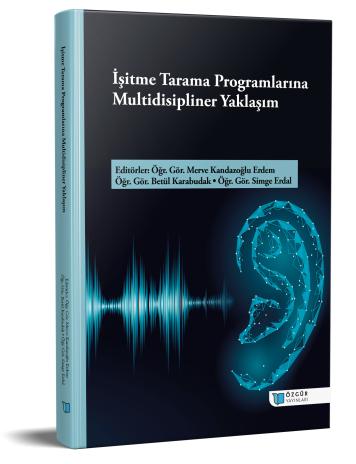
Multidisciplinary Approach to Hearing Screening Programs.
Synopsis
Early diagnosis of hearing loss has a decisive impact on communication, speech-language development, and academic achievement during childhood and adulthood. While newborn hearing screening programs enable the rapid identification of potential hearing loss, the diagnostic confirmation process requires detailed audiological evaluations. This section details the behavioral and objective test batteries used in diagnosing hearing loss. Pure-tone audiometry, speech audiometry, pediatric behavioral tests (Behavioral Observation Audiometry, Visual Reinforcement Audiometry, Play Audiometry), otoacoustic emission tests, acoustic immittance testing, and electrophysiological assessment methods (Auditory Brainstem Responses and ASSR) are the core components of the section. Each of these tests provides critical information in determining an individual's hearing threshold, the degree, type, and location of hearing loss. The department emphasizes the importance of the cross-checking principle in the diagnostic approach and highlights the necessity of using objective and behavioral methods together, especially in the pediatric population.
How to cite this book
License

This work is licensed under a Creative Commons Attribution-NonCommercial 4.0 International License.
Published
DOI
Categories
Copyright (c) 2025 Merve Kandazoğlu Erdem- Simge Erdal- Betül Karabudak; Tuğba Ural- Merve Kandazoğlu Erdem- Simge Erdal- Esra Kuru- Betül Karabudak- Esra Sarlık- Büşra Nehir Şahin