
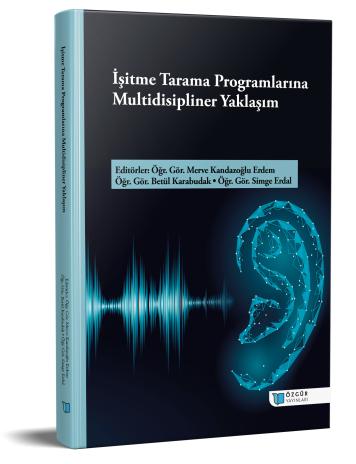
Hearing Screening Programs and Protocols in The Geriatric Population
Chapter from the book:
Kandazoğlu Erdem,
M.
&
Erdal,
S.
&
Karabudak,
B.
(eds.)
2025.
Multidisciplinary Approach to Hearing Screening Programs.
Synopsis
This section addresses the increasing prevalence, etiology, individual and societal impacts of presbycusis in the geriatric population, and the critical importance of early diagnosis and prevention strategies. It is highlighted that the frequency of hearing loss escalates from 12.7% at age 60 to over 58% at age 90, establishing presbycusis as the most common cause of disability in the elderly.Its etiology is complex, typically presenting as bilateral, symmetrical, sensorineural hearing loss most prominent in high frequencies. Beyond cellular losses within the inner ear, risk factors such as cardiovascular diseases, noise exposure, and ototoxic medications accelerate the condition.Given the irreversible nature of presbycusis, prevention strategies and early diagnosis are of paramount importance. Early diagnosis is critical not only for maintaining functional independence but also for mitigating the multidimensional negative effects caused by hearing loss, such as cognitive decline, dementia, depression, social isolation, and increased risk of falls. Studies indicate that every 10 dB of hearing loss increases the risk of falling by 1.4 times.While there is no global consensus on geriatric hearing screening protocols, the WHO recommends regular screening for individuals over 50 years of age. There is no national screening protocol in Turkey, but the Family Medicine Guide outlines the role of screening and referral. The fundamental stages of the diagnostic process are history taking, physical examination, and pure-tone audiometry, while speech audiometry is the most important functional assessment for rehabilitation planning. Self-assessment questionnaires like the HHIE-S are recommended as cost-effective tools for early diagnosis in primary care settings.In conclusion, the development of systematic hearing screening programs and the widespread adoption of rehabilitation in the geriatric population remain essential public health strategies that support active aging and reduce the risk of cognitive decline and dependency.
How to cite this book
License

This work is licensed under a Creative Commons Attribution-NonCommercial 4.0 International License.
Published
DOI
Categories
Copyright (c) 2025 Merve Kandazoğlu Erdem- Simge Erdal- Betül Karabudak; Tuğba Ural- Merve Kandazoğlu Erdem- Simge Erdal- Esra Kuru- Betül Karabudak- Esra Sarlık- Büşra Nehir Şahin