
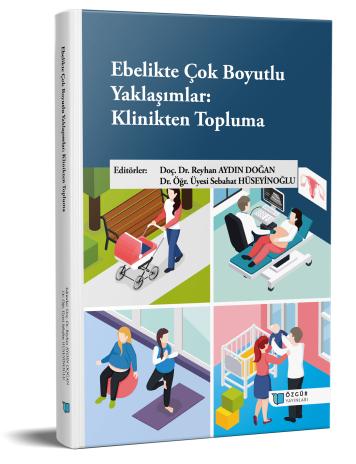
Knowledge and Responsibility in Forensic Midwifery
Chapter from the book:
Aydın Doğan,
R.
&
Hüseyinoğlu,
S.
(eds.)
2025.
Multidimensional Approaches in Midwifery: From Clinic to Community.
Synopsis
Midwifery is not only a healthcare discipline encompassing pregnancy, childbirth, and postpartum care services; it is also a professional field with multifaceted responsibilities aimed at protecting the physical, mental, and social well-being of individuals. The emergence of legal proceedings in cases of faulty, incomplete, or negligent healthcare services necessitates that midwives possess legal knowledge and awareness. In this context, forensic midwifery stands out as a significant area of expertise located at the intersection of healthcare and legal systems. Forensic midwifery is a multidisciplinary approach encompassing the identification, evaluation, and management of forensic cases that arise from intent, negligence, or carelessness and that impair an individual's physical or mental integrity. Many situations, such as cases of violence, injuries, accidents, sexual offenses, suicide attempts, poisonings, and suspicious deaths, are considered within the scope of forensic cases. The processes of initial assessment, history taking, physical examination, and evidence identification are of great importance for the healthy conduct of the legal process. The responsibilities of midwives in forensic cases include: Forensic midwifery involves collecting, preserving, recording, and maintaining the chain of evidence, as well as providing supportive and reassuring care to the victim. Furthermore, reporting forensic cases to the relevant authorities is a legal obligation, and failure to do so can lead to legal sanctions. Therefore, midwives need to have sufficient knowledge of current legislation, legal processes, and professional responsibilities. In conclusion, forensic midwifery is a specialized field that intersects midwifery, medicine, law, and forensic science, requiring knowledge, skills, and ethical sensitivity. To enable midwives to effectively fulfill their roles in forensic cases, increasing their knowledge level in the field of forensic midwifery, strengthening training opportunities, and developing professional awareness are of great importance.
How to cite this book
License

This work is licensed under a Creative Commons Attribution-NonCommercial 4.0 International License.
Published
DOI
Categories
Copyright (c) 2025 Reyhan Aydın Doğan- Sebahat Hüseyinoğlu; Canan Selvihan İlhan- Reyhan Aydın Doğan- Yasemin Aydın Kartal- Begüm Can- Kübra Şerif Öztürk- Nesrin Arslan- Nurten Özçalkap- Sibel Karakoç- Yeliz Atasoy- Hatice Acar Bektaş- Kübra Özcan- Fatıma Betül Yılmaz- Nargizahon Erkaboeva- Yeter Çuvadar Baş- Rukiye Karabacak- Feyza Nur Altınbaş- Kübra Nur Kılıç- Maral Ovezova- Hilal Kabakçı- Müge Demir- Merve Akıncı- Ayşe Melike Düzyer- Ebru Sağıroğlu- Sebahat Hüseyinoğlu- Yaren Buse Cantimur- Merve Afacan Satıoğlu