
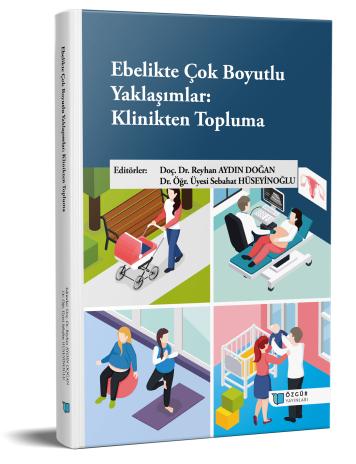
Exercise in Pregnancy and the Role of Midwifery
Chapter from the book:
Aydın Doğan,
R.
&
Hüseyinoğlu,
S.
(eds.)
2025.
Multidimensional Approaches in Midwifery: From Clinic to Community.
Synopsis
Exercise during pregnancy is widely recognized as an essential health behavior for protecting and promoting maternal and fetal health. Physiological, psychological, and metabolic changes occurring throughout pregnancy directly influence women’s physical activity levels and exercise adherence. This book chapter addresses the importance of exercise during pregnancy, its effects on maternal and neonatal health, safe exercise practices, and the role of midwifery in promoting and supporting physical activity, based on current evidence.The chapter highlights that regular and appropriately planned exercise during pregnancy is associated with improved control of gestational weight gain, reduced risk of gestational diabetes and hypertensive disorders, lower cesarean section rates, and increased vaginal birth rates. In addition, exercise has been shown to alleviate musculoskeletal discomfort, enhance quality of life, and support physical preparation for labor. From a fetal health perspective, physical activity during pregnancy supports placental circulation and contributes to favorable birth outcomes without adversely affecting fetal growth and development. Psychosocial benefits of exercise are also emphasized, including reduced perceived stress, improved mental well-being, enhanced self-efficacy, and a stronger sense of body control among pregnant women. The chapter further underlines that safe exercise practices should be individualized according to gestational age, maternal health status, and potential contraindications. A central focus of the chapter is the role of midwives in exercise promotion during pregnancy. Through counseling, education, monitoring, and referral, midwives play a key role in reducing exercise-related anxiety and encouraging physical activity participation. Moreover, midwifery-led interventions are particularly important in addressing barriers such as low motivation and in supporting disadvantaged populations. Strengthening midwifery practices is therefore essential for ensuring that exercise becomes a sustainable and effective health behavior throughout pregnancy.
How to cite this book
License

This work is licensed under a Creative Commons Attribution-NonCommercial 4.0 International License.
Published
DOI
Categories
Copyright (c) 2025 Reyhan Aydın Doğan- Sebahat Hüseyinoğlu; Canan Selvihan İlhan- Reyhan Aydın Doğan- Yasemin Aydın Kartal- Begüm Can- Kübra Şerif Öztürk- Nesrin Arslan- Nurten Özçalkap- Sibel Karakoç- Yeliz Atasoy- Hatice Acar Bektaş- Kübra Özcan- Fatıma Betül Yılmaz- Nargizahon Erkaboeva- Yeter Çuvadar Baş- Rukiye Karabacak- Feyza Nur Altınbaş- Kübra Nur Kılıç- Maral Ovezova- Hilal Kabakçı- Müge Demir- Merve Akıncı- Ayşe Melike Düzyer- Ebru Sağıroğlu- Sebahat Hüseyinoğlu- Yaren Buse Cantimur- Merve Afacan Satıoğlu