
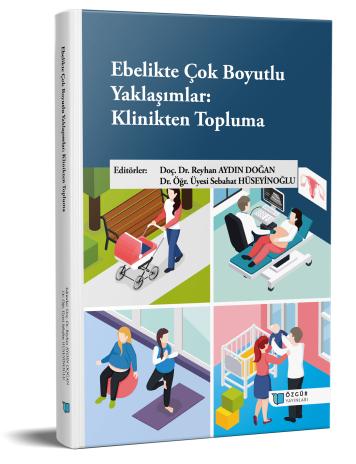
Factors Affecting Breast Milk Production in the Postpartum Period
Chapter from the book:
Aydın Doğan,
R.
&
Hüseyinoğlu,
S.
(eds.)
2025.
Multidimensional Approaches in Midwifery: From Clinic to Community.
Synopsis
Breast milk production in the postpartum period is a multidimensional and dynamic process shaped by the interaction of biological, physiological, psychosocial, and environmental factors. Lactation is a complex neuroendocrine mechanism encompassing the synthesis, secretion, and transfer of breast milk to the newborn, and is of vital importance for both maternal and infant health. The World Health Organization recommends that infants be exclusively breastfed for the first six months of life and that breastfeeding continue until the age of two. Breast milk production occurs in three phases: Lactogenesis I, during which breast tissue is prepared during pregnancy; Lactogenesis II, during which milk secretion is activated by hormonal changes after birth; and Lactogenesis III, during which milk production is maintained based on demand. Prolactin and oxytocin hormones play a central role in this process, while regular and efficient emptying of the breast is a crucial mechanism for the continuity of milk production. In addition to biological factors such as maternal age, parity, mode of delivery, health status, nutrition, and hydration level, breastfeeding experience, support from healthcare professionals, social environment, and cultural beliefs significantly influence breast milk production. Furthermore, conditions such as postpartum depression and psychological stress can negatively impact the lactation process. Among infant factors, gestational age, birth weight, neuromotor maturity, sucking behavior, and clinical condition are prominent. A holistic approach addressing maternal, infant, and environmental factors is necessary for the successful initiation and maintenance of breast milk production. Providing effective and individualized breastfeeding support in the postpartum period is considered a fundamental element in increasing breastfeeding success.
How to cite this book
License

This work is licensed under a Creative Commons Attribution-NonCommercial 4.0 International License.
Published
DOI
Categories
Copyright (c) 2025 Reyhan Aydın Doğan- Sebahat Hüseyinoğlu; Canan Selvihan İlhan- Reyhan Aydın Doğan- Yasemin Aydın Kartal- Begüm Can- Kübra Şerif Öztürk- Nesrin Arslan- Nurten Özçalkap- Sibel Karakoç- Yeliz Atasoy- Hatice Acar Bektaş- Kübra Özcan- Fatıma Betül Yılmaz- Nargizahon Erkaboeva- Yeter Çuvadar Baş- Rukiye Karabacak- Feyza Nur Altınbaş- Kübra Nur Kılıç- Maral Ovezova- Hilal Kabakçı- Müge Demir- Merve Akıncı- Ayşe Melike Düzyer- Ebru Sağıroğlu- Sebahat Hüseyinoğlu- Yaren Buse Cantimur- Merve Afacan Satıoğlu