
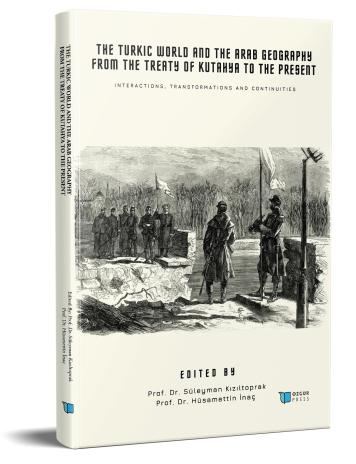
The Turkic World and The Arab Geography from The Treaty of Kutahya to The Present
Synopsis
The Treaty of Kütahya (1833) represents a critical turning point in Ottoman history, reflecting the political, military, and diplomatic challenges faced by the Empire during the nineteenth century. The military setbacks suffered during the rebellion of Mehmed Ali Pasha of Egypt, the weakening of central authority, and the growing involvement of the Great Powers transformed the treaty into an event with long-term historical consequences rather than a temporary settlement.
This volume is based on the papers presented at the Kütahya Treaty Symposium hosted by Kütahya Dumlupınar University. The contributions examine the Treaty of Kütahya through its historical context, military background, impact on center–province relations, and implications within the international system. The chapters explore how the treaty reshaped the political structure of the Ottoman state and altered prevailing notions of sovereignty and governance.
Drawing on archival sources, classical Ottoman historiography, and contemporary scholarship, the studies included in this book offer renewed interpretations of the Treaty of Kütahya and its place in Ottoman history. The volume seeks to provide a comprehensive academic reference for scholars of Ottoman political and military history and to contribute to ongoing debates surrounding nineteenth-century imperial transformation.
How to cite this book
License

This work is licensed under a Creative Commons Attribution-NonCommercial 4.0 International License.
Published
ISBN
DOI
Statistics
Categories
Copyright (c) 2025 Süleyman Kızıltoprak- Hüsamettin İnaç