
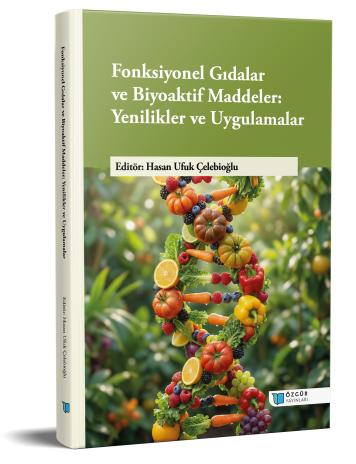
The Potential and Mechanisms of Postbiotics in Functional Foods
Chapter from the book:
Çelebioğlu,
H.
U.
(ed.)
2025.
Functional Foods and Bioactive Compounds: Innovations and Applications.
Synopsis
Food is a fundamental element in maintaining human health and supports physiological functions through its various bioactive components. In recent years, increasing evidence on the health effects of microbiota-derived metabolites has led to the emergence of the concept of postbiotics. Postbiotics are bioactive compounds produced by the metabolic products of microorganisms rather than the live microbes themselves, and they stand out as next-generation functional food components that overcome the safety, stability, and viability limitations of probiotics.
Among the advantages of postbiotics are high bioavailability, long shelf life, heat and pH stability, safe use, and easy integration into formulations. With these features, they have wide application potential in both food technology and health-supporting products. The main postbiotic components include cell-free supernatants, short-chain fatty acids (SCFAs), exopolysaccharides (EPS), bacteriocins, peptidoglycans, and teichoic acids. These components exhibit antimicrobial, anti-inflammatory, anticancer, and antiviral effects, contributing to immune modulation, strengthening of the intestinal barrier, suppression of pathogens, and reduction of inflammation. It has been reported that metabolites derived especially from LAB (lactic acid bacteria) can be used both as natural preservative agents and as functional ingredients in food products. In this chapter, the use of postbiotics in foods is discussed.
How to cite this book
License

This work is licensed under a Creative Commons Attribution-NonCommercial 4.0 International License.
Published
DOI
Categories
Copyright (c) 2025 Hasan Ufuk Çelebioğlu; Hasan Ufuk Çelebioğlu- Sena Davran Bulut- Seda Nur Erciyes- Hilal Yılmaz- Recep Taş- Nilay Akkuş Taş