
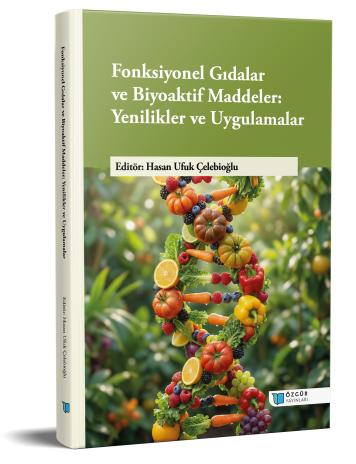
Smart Systems in Functional Foods
Chapter from the book:
Çelebioğlu,
H.
U.
(ed.)
2025.
Functional Foods and Bioactive Compounds: Innovations and Applications.
Synopsis
Nutrition science is currently evolving from generalized, population-based dietary guidelines toward a "personalized nutrition" paradigm grounded in individuals' genetic makeup, metabolic characteristics, and lifestyle data. This chapter explores the integration of functional foods with intelligent technologies, analyzing the transformative impact of this novel approach on public health and individual health management. It details how advanced technologies—such as the Internet of Things (IoT), artificial intelligence (AI), and big data analytics—are integrated into food systems ranging from production to consumption. Particular focus is placed on the critical role of nanotechnological delivery systems, including nanoemulsions and liposomes, which enhance the bioavailability and stability of functional components for targeted nutrient delivery. Furthermore, the chapter analyzes the process of transforming real-time physiological data, obtained via biosensors and wearable technologies, into dynamic, personalized nutrition plans through AI processing. The discussion also extends to how smart packaging systems, 3D food printing, and mobile health applications enhance the consumer experience. Finally, while highlighting challenges such as data privacy, ethical concerns, and regulatory gaps, the study concludes that the synergy between functional foods and smart systems offers a proactive solution for preventing chronic diseases and building sustainable public health.
How to cite this book
License

This work is licensed under a Creative Commons Attribution-NonCommercial 4.0 International License.
Published
DOI
Categories
Copyright (c) 2025 Hasan Ufuk Çelebioğlu; Hasan Ufuk Çelebioğlu- Sena Davran Bulut- Seda Nur Erciyes- Hilal Yılmaz- Recep Taş- Nilay Akkuş Taş