
The Monstrous Masculine: Gothic Horror and the Crisis of Male Power in Sarah Kane’s Blasted
Chapter from the book:
Öztürk,
A.
S.
&
Tekşen,
İ.
(eds.)
2025.
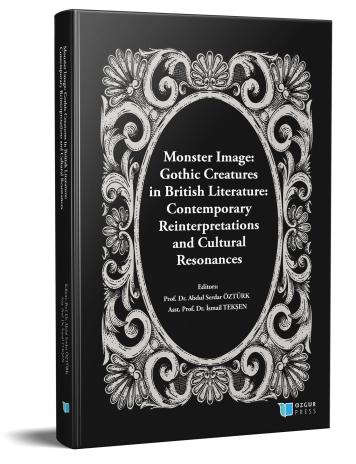
Monster Image: Gothic Creatures in British Literature Contemporary Reinterpretations and Cultural Resonances.
Synopsis
This article analyzes Sarah Kane’s Blasted as a modern Gothic horror masterpiece through the frameworks of Raewyn Connell’s concepts of masculinity and crisis, Julia Kristeva’s notion of the abject, and Giorgio Agamben’s theory of biopower and bare life. Focusing on key scenes—such as the toxic relationship between Ian and Cate reflecting the crisis of masculine identity, the escalation of violence and humiliation with the entrance of the Soldier, and the aftermath following the Soldier’s suicide—the study reveals how power, violence, horror, and destruction intersect within the Gothic atmosphere. Kane’s theatre reveals a double-edged structure of violence, in which the perpetrator becomes the victim and domination consumes all. In Blasted, Kane exposes the decay inherent in the existing order and evokes ethical responsibility amidst the ruins, transforming horror into a shocking form of catharsis that reawakens the possibility of renewal. Such an alternative form of life redefines what it means to be human after the collapse of order, turning the stage into a space where destruction and creation coexist.
How to cite this book
License

This work is licensed under a Creative Commons Attribution-NonCommercial 4.0 International License.
Published
DOI
Categories
Copyright (c) 2025 Abdul Serdar Öztürk- İsmail Tekşen; Ferhat Ordu- Murat Karakaş- Ali Kubat- Selma Parlakay Topbaş- Afranur Yılmaz- Gözde Begüm Mızrak- Ayça Gülünay- Mustafa Canlı- Asım Aydın- Abdullah Boyar- Gökhan Tugay Köksal- Zeliha Kuruducu- Ömer Özdemir- Nihal Topcu- Lokman Şehitoğlu- Tuba Aydan- İsmail Tekşen