
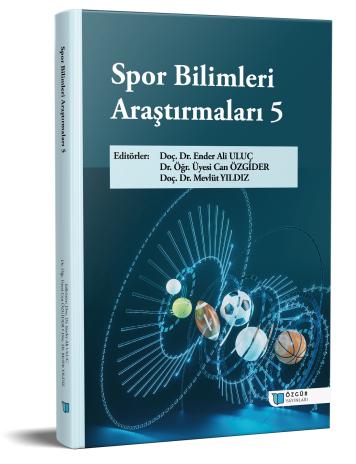
Silent Waves of Stress: The Role of Emotional Regulation Skills in Sports
Chapter from the book:
Uluç,
E.
A.
&
Özgider,
C.
&
Yıldız,
M.
(eds.)
2025.
Sports Sciences Research 5.
Synopsis
Athletes face many sources of stress such as performance expectation, competitive pressure, intense training processes and risk of injury. These stress factors have a direct impact on the athlete's attention level, motivation and performance outcomes. Increasing pressure, especially in the competition environment, can increase the mental load of athletes and cause performance fluctuations. Emotion regulation skills cover a basic psychological process that enables the individual to recognize the emotions he/she experiences, manage the intensity of these emotions, and develop appropriate reactions to the situation.
According to the results obtained within the scope of the study, it can be stated that the stress levels of athletes who can manage their emotions in a healthy way in the face of negative situations encountered in the sports environment are more balanced and the continuity of performance can be maintained more effectively. Developed emotional regulation skills strengthen athletes' capacity to cope with stress and support psychological resilience.
How to cite this book
License

This work is licensed under a Creative Commons Attribution-NonCommercial 4.0 International License.
Published
DOI
Categories
Copyright (c) 2025 Ender Ali Uluç- Can Özgider- Mevlüt Yıldız; Gamze Elif Adiloğulları- Reşat Kartal- Ferhat Aktaş- Deniz Ünver- Günseli Duman- Savaş Duman- Ahmet Şahin- Aysun Yavuz