
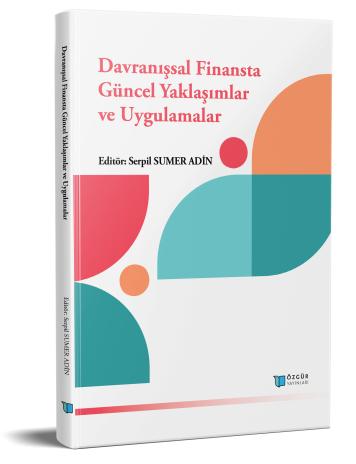
Gamified Investing and Behavioral Finance
Chapter from the book:
Sumer Adin,
S.
(ed.)
2025.
Current Approaches and Applications in Behavioral Finance.
Synopsis
Gamification is a technological tool used to influence an individual's behavior or enhance an experience through the use of game elements in non-game contexts. Gamification has recently been used in finance, as in many other fields. In recent years, the rise of mobile applications in personal finance has transformed how individuals approach money management, saving, and investing. These apps, which utilize user-centered design, increasingly utilize gamification techniques by integrating game-like features such as progress tracking, badges, and rewards to encourage users to develop healthy financial habits. This trend is particularly appealing to younger generations who are increasingly engaged with digital platforms and need motivation to actively manage their finances. However, it should be noted that gamification can lead to the perception of the financial system as a simple process. There is always a threat that individuals may diminish the importance they place on the financial system due to the advancements brought by gamification. Therefore, caution should be exercised in gamification, particularly to prevent individuals from exhibiting irrational behavior. This study, after explaining the concept of gamification, addresses its interaction with finance. It then provides information on platforms developed to facilitate the widespread use of gamification globally. The final section of the study provides information on the irrational investment behaviors that gamification can create and explains the steps to take to avoid these impacts. It is believed that this study will contribute to the gap in the national literature in this area.
How to cite this book
License

This work is licensed under a Creative Commons Attribution-NonCommercial 4.0 International License.
Published
DOI
Categories
Copyright (c) 2025 Serpil Sumer Adin; Orhan Keskin- Derviş Boztosun- Muhammed İkbal Tepeler- Yusuf Akan- Salih Aydın- İlknur Can- S. Öznur Sakınç- İlker Sakınç