
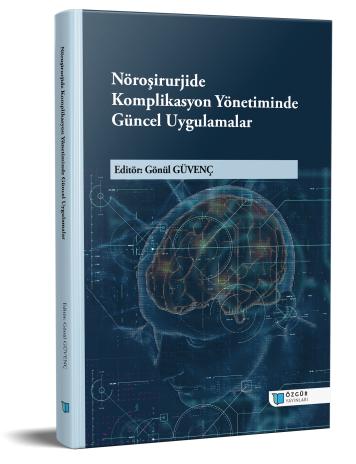
Multimodal Monitoring in the Management of Complications in Neurocritical Care
Chapter from the book:
Güvenç,
G.
(ed.)
2025.
Current Practices in The Management of Complication in Neurosurgery.
Synopsis
Neurocritical care patients are at high risk for secondary brain injury that may develop after traumatic brain injury, intracranial hemorrhage, subarachnoid hemorrhage, brain tumors, and complex spinal surgeries. In this patient group, a substantial proportion of mortality and long-term neurological morbidity is related not to the primary insult but to secondary pathophysiological processes such as hypoxia, ischemia, elevated intracranial pressure, impaired cerebral perfusion, and metabolic crisis. Conventional clinical neurological examination and single-modality monitoring methods are often insufficient to detect these complex processes early. Therefore, multimodal neuromonitoring (MMM) has become a fundamental component of modern neurocritical care.
Multimodal neuromonitoring aims to assess intracranial pressure, cerebral perfusion pressure, brain tissue oxygenation, cerebral blood flow, autoregulation, electrical activity, and metabolic parameters simultaneously and in an integrated manner. This approach enables early recognition of secondary brain injury, tracking of physiological trends, and individualized treatment. The combined use of modalities such as PbtO₂, ICP, TCD, EEG, NIRS, and cerebral microdialysis reduces the risk of misinterpretation associated with decisions based on a single parameter. Moreover, MMM allows patient-specific optimization of osmotherapy, ventilation strategies, hemodynamic management, and depth of sedation.
This section reviews commonly used multimodal monitoring tools in neurocritical care, addressing their physiological basis, advantages, and limitations, and discusses the clinical contribution of MMM to early detection and management of complications. In conclusion, multimodal neuromonitoring is a contemporary approach with the potential to improve patient outcomes by enabling a holistic interpretation of physiological data for the prevention and management of complications in neurocritical care.
How to cite this book
License

This work is licensed under a Creative Commons Attribution-NonCommercial 4.0 International License.
Published
DOI
Categories
Copyright (c) 2025 Gönül Güvenç; Canan Gürsoy- Gülay Öztürk- Mehtap Çullu- Güven Gürsoy- Ozan Aydoğdu- Melih Furkan Durak- Mustafa Türkmen- Ufuk Bozkurt- Gülşah Köse- Metehan Küçükkurt- Gönül Güvenç- Beste Dalbatan- Niyazi Taşkıran- Mertcan Güler- Eda Ceylan