
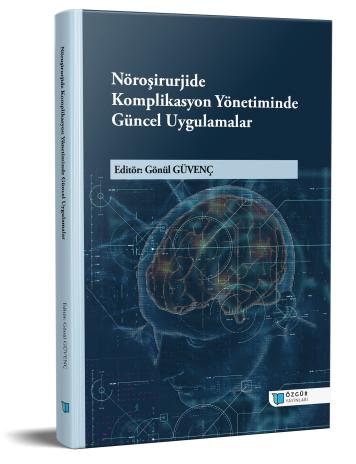
Vertebral Augmentation (Kyphoplasty and Vertebroplasty) Complications and Management, From Recent Literature
Şu kitabın bölümü:
Güvenç,
G.
(ed.)
2025.
Nöroşirurjide Komplikasyon Yönetiminde Güncel Uygulamalar .
Özet
Vertebral augmentation (VA), particularly percutaneous vertebroplasty and kyphoplasty, is widely used for painful osteoporotic vertebral compression fractures and selected neoplastic lesions. While these procedures provide rapid pain relief and functional improvement, they carry a distinct spectrum of complications that require structured prevention, early recognition, and timely management. This chapter summarizes recent literature on VA from 2020–2025 and integrates it into a pragmatic, complication-focused framework. Patient selection and timing are reviewed with an emphasis on imaging–pain concordance, fracture acuity, and competing surgical options. Peri-procedural workflow is detailed, including positioning, local anesthesia with light sedation, and the growing role of erector spinae plane blocks to reduce opioid requirements in frail patients. Technical sections address uni- versus bipedicular access, cement viscosity, vertebral venography and unsubtracted roadmap techniques, and radiation hygiene. Major complication domains are then discussed: needle- and trajectory-related vascular, pleural and neural injuries; cement-injection–related events such as intradiscal, anterior/lateral and posterior epidural leakage; venous run-off leading to pulmonary and cardiac cement embolism; infectious sequelae including discitis, osteomyelitis and epidural abscess; and index- and adjacent-level fractures driven by cement distribution and bone quality. For each domain, the chapter provides checklists and algorithms for intra- and post-procedural triage, imaging, and definitive management, alongside a follow-up pathway that couples symptom surveillance with osteoporosis and fracture-risk stewardship. When performed with meticulous technique, evidence-based analgesia, and proactive complication management, VA remains a safe and effective option in appropriately selected patients.
Anahtar Kelimeler:
Kaynakça Gösterimi
Lisans

Bu çalışma Creative Commons Attribution-NonCommercial 4.0 International License ile lisanslanmıştır.
Yayın Tarihi
DOI
Kategoriler
Telif Hakkı (c) 2025 Gönül Güvenç; Canan Gürsoy- Gülay Öztürk- Mehtap Çullu- Güven Gürsoy- Ozan Aydoğdu- Melih Furkan Durak- Mustafa Türkmen- Ufuk Bozkurt- Gülşah Köse- Metehan Küçükkurt- Gönül Güvenç- Beste Dalbatan- Niyazi Taşkıran- Mertcan Güler- Eda Ceylan