
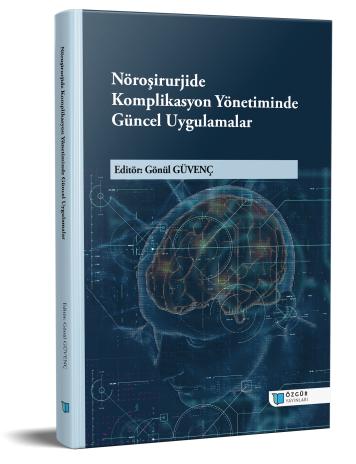
Management of Complications in Ventriculoperitoneal Shunt Surgery
Chapter from the book:
Güvenç,
G.
(ed.)
2025.
Current Practices in The Management of Complication in Neurosurgery.
Synopsis
Hydrocephalus is a neurological condition caused by the excessive accumulation of cerebrospinal fluid in the ventricles and subarachnoid space. A ventriculoperitoneal (V-P) shunt can be placed for treatment. While V-P shunt is the most commonly used method for treating hydrocephalus, it carries serious complications. Complications include shunt-related complications, infections, and abdominal complications. In case of shunt obstruction or malposition, shunt revision or removal and replacement of the obstructed part, appropriate antibiotic therapy based on CSF culture in the presence of infection, external ventricular drainage, and shunt revision, abdominal surgery for bowel perforation, and abdominal pseudocyst formation can be performed. In this study, current treatment approaches for complications are discussed.
How to cite this book
License

This work is licensed under a Creative Commons Attribution-NonCommercial 4.0 International License.
Published
DOI
Categories
Copyright (c) 2025 Gönül Güvenç; Canan Gürsoy- Gülay Öztürk- Mehtap Çullu- Güven Gürsoy- Ozan Aydoğdu- Melih Furkan Durak- Mustafa Türkmen- Ufuk Bozkurt- Gülşah Köse- Metehan Küçükkurt- Gönül Güvenç- Beste Dalbatan- Niyazi Taşkıran- Mertcan Güler- Eda Ceylan