
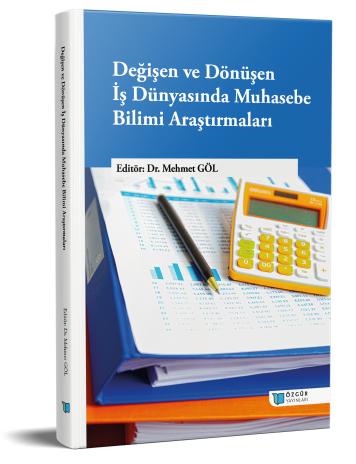
Bibliometric Trends in ESG Reporting Within the Accounting Literature (2000-2025)
Chapter from the book:
Göl,
M.
(ed.)
2025.
Accounting Science Research in a Changing and Transforming Business World.
Synopsis
Global ecological crises, stakeholder expectations, and legal regulations have transformed corporate reporting from a financial orientation into a holistic structure. The aim of this study is to analyze the developmental trajectory and conceptual evolution of Environmental, Social, and Governance (ESG) reporting research in the accounting literature between 2000 and 2025 using bibliometric methods. The dataset obtained from the Scopus database was examined using performance analysis, keyword co-occurrence, co-authorship, and citation analysis techniques via VOSviewer software. The findings indicate that the literature has recorded vertical growth, particularly after 2020, driven by the impact of the European Green Deal (CSRD) and the pandemic. It is observed that the focus in the literature has shifted from a voluntary-based Corporate Social Responsibility (CSR) and legitimacy axis to a measurable, auditable ESG Reporting and firm value approach integrated with financial performance. Furthermore, the analyses revealed that the subject is situated at the intersection of accounting, ethics, and environmental science disciplines. Consequently, ESG reporting has become a strategic element of corporate value creation and risk management.
How to cite this book
License

This work is licensed under a Creative Commons Attribution-NonCommercial 4.0 International License.
Published
DOI
Categories
Copyright (c) 2025 Mehmet Göl; Aysun Atagan Çetin- Murat Özdemir- Şifa Kirhasanoğlu- Mehmet Göl- Tevhit Kahraman- Adem Gömrükçü- Bekir Korkmaz- Mert Testere