
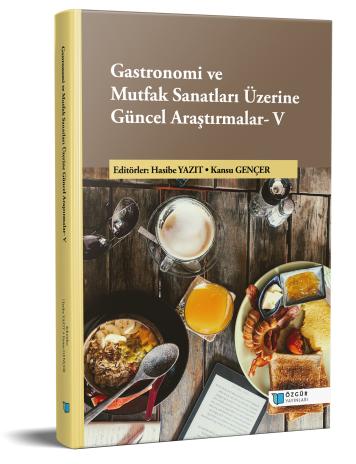
The Intellectual Structure and Interdisciplinary Trends of Permaculture Research: A Bibliometric Analysis
Chapter from the book:
Yazıt,
H.
&
Gençer,
K.
(eds.)
2025.
Current Research on Gastronomy and Culinary Arts- V.
Synopsis
The global food system is currently confronted with severe challenges, including climate change, the rapid depletion of natural resources, and the increasing fragility of ecological cycles. These pressures underscore the critical importance of ecologically sustainable food production models. In this context, permaculture has emerged as an international design movement aimed at ensuring the sustainability of food systems by preserving the ecological balance of both urban and rural environments and by promoting conscious food consumption. Understanding the position of the permaculture concept within the scientific literature, identifying its interdisciplinary structure, and determining future research directions have therefore become essential.
This study aims to analyze academic publications in the field of permaculture through bibliometric methods, examining trends in the literature and mapping its interdisciplinary landscape. As of June 2025, a total of 648 articles published over the past 25 years were retrieved from the Web of Science (WOS) and Scopus databases and subjected to detailed analysis. The findings indicate that publications on permaculture have increased steadily since 2007, reaching their peak in 2020. Notably, the most frequently cited studies tend to focus not directly on permaculture itself, but on broader themes such as sustainable agriculture and regenerative practices. Furthermore, the results reveal that research on permaculture has been produced across 101 distinct disciplines, with the highest concentrations in the natural sciences, agricultural sciences, and business and economics. These findings confirm the multidimensional and interdisciplinary nature of permaculture as well as its critical role within the global sustainability agenda. The evidence obtained from the bibliometric analysis provides a comprehensive framework that can inform and guide future scientific research in the field.
How to cite this book
License

This work is licensed under a Creative Commons Attribution-NonCommercial 4.0 International License.
Published
DOI
Categories
Copyright (c) 2025 Hasibe Yazıt- Kansu Gençer; Atilla Akbaba- Alpay Tırıl- Müesser Korkmaz- Tarık Komşular- Aslı Muslu Can- Ayşen Develioğlu Arslan- Gülsüm Yurtseven- Hasan Samet Tandoğan- Mehmet Sedat İpar- Şüheda Hilal Güven- Gülsün Duran- Mert Can Tekeler- Begüm Dilara Emiroğlu- Betül Yeşiltepe Erkayıran- Mesut Mehmet Demirel- Gülnisa Turan- Hasibe Yazıt- Volkan Aslan