
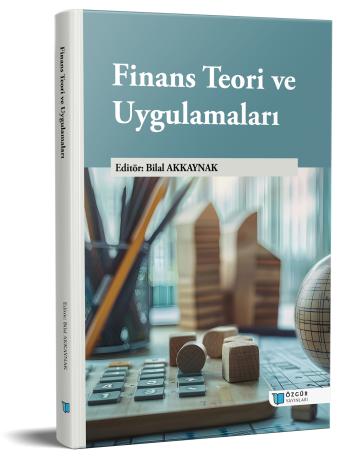
Systematic Risks and Capital Structure: An Application on the Tourism Sector
Chapter from the book:
Akkaynak,
B.
(ed.)
2025.
Finance Theory and Practices.
Synopsis
Capital structure refers to the combination of debt and equity in a business. It forms the core of a company's financing decisions. Therefore, it needs to be managed meticulously for businesses to be able to start and continue their commercial activities. It is a topic frequently studied in finance literature over the last century and has maintained its importance in every period. The aim of this study is to determine the variability of the determinants of capital structure in the tourism sector in an environment of uncertainty. The period of uncertainty used in this study is the Covid-19 pandemic. In the application section, the variability of the capital structures of tourism companies listed on BIST in Turkey during the pandemic period is investigated. In this study, short-term debt/total resources, total debt/total resources, long-term debt/total resources, and equity/total resources were used as dependent variables. Net profit/total equity, current assets/short-term debt, net working capital, current assets/fixed assets, cost of goods sold/inventory, cost of goods sold/net sales, net sales/trade receivables, operating expenses/net sales, and net profit/total assets were used as independent variables. The pandemic period was included in the model by representing it with a dummy variable. The research results show that the pandemic is negatively correlated with short-term liabilities, while it is positively correlated with long-term debt and equity. In other words, during the pandemic, businesses shifted towards long-term borrowing and equity financing. A decrease in the use of short-term debt was observed.
How to cite this book
License

This work is licensed under a Creative Commons Attribution-NonCommercial 4.0 International License.
Published
DOI
Categories
Copyright (c) 2025 Bilal Akkaynak; Kübra Saka Ilgın- Ahmet Zelka- İsmail Fatih Ceyhan- Berk Yıldız- Ferhat Demirci- Aziz Kaldırım- Bilal Akkaynak- Gülhan Deniz- Muhsin Uslu- Murat Yıldırım- Hacer Şeyma Dilaver- Salim Sercan Sarı- Hilal Ok Ergün- Hümeyra Yıldız- Muhammed Yılmaz- İbrahim Yaşar Gök- İnci Merve Altan- Adem Ruhan Sönmez- Mehmet Ozan Akman- Hasan Aydın Okuyan- Devran Deniz- Elif Sinem Köse- Muhammed Hanifi Van- Yasin Cihan