
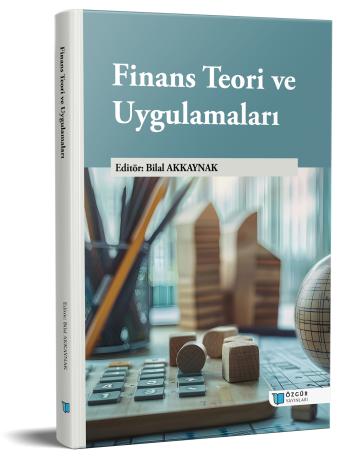
Capital Contribution Obligation in Commercial Companies: A Financial and Legal Assessment
Chapter from the book:
Akkaynak,
B.
(ed.)
2025.
Finance Theory and Practices.
Synopsis
The obligation to contribute capital in commercial companies is regulated under the Turkish Commercial Code, and the manner in which this obligation is fulfilled directly affects the composition and quality of companies’ equity, the reliability of financial statements, and their capacity to manage liquidity and risk. This study examines the capital contribution obligation by jointly addressing its legal and financial dimensions, with a particular focus on how different types of capital influence firms’ balance sheet structures and financial sustainability. Going beyond a purely normative analysis, the study evaluates the financial consequences of cash and in-kind capital contributions in terms of liquidity, valuation uncertainty, and risk allocation. Within this framework, various forms of in-kind capital—such as receivables, negotiable instruments, securities, movable and immovable assets, business enterprises, intangible assets, digital assets, and crypto-assets—are analyzed with respect to their economic functions and their ability to generate effectively usable equity. The study also addresses the legal consequences and financial management implications of the improper performance of the capital contribution obligation, thereby highlighting the strategic importance of this obligation for the long-term financial stability of companies.
How to cite this book
License

This work is licensed under a Creative Commons Attribution-NonCommercial 4.0 International License.
Published
DOI
Categories
Copyright (c) 2025 Bilal Akkaynak; Kübra Saka Ilgın- Ahmet Zelka- İsmail Fatih Ceyhan- Berk Yıldız- Ferhat Demirci- Aziz Kaldırım- Bilal Akkaynak- Gülhan Deniz- Muhsin Uslu- Murat Yıldırım- Hacer Şeyma Dilaver- Salim Sercan Sarı- Hilal Ok Ergün- Hümeyra Yıldız- Muhammed Yılmaz- İbrahim Yaşar Gök- İnci Merve Altan- Adem Ruhan Sönmez- Mehmet Ozan Akman- Hasan Aydın Okuyan- Devran Deniz- Elif Sinem Köse- Muhammed Hanifi Van- Yasin Cihan