
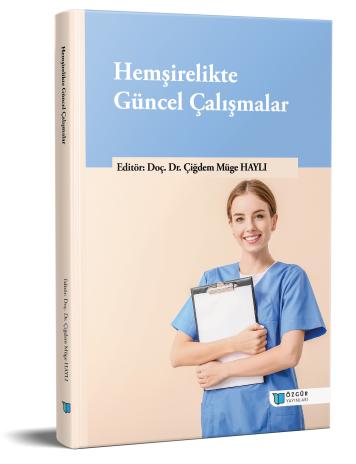
The Historical Development of Tools and Equipment Used in Nursing Care: A Chronological Review From Antiquity to The Present
Chapter from the book:
Haylı,
Ç.
M.
(ed.)
2025.
Current Studies İn Nursing.
Synopsis
The fundamental role of nursing is to provide care, and this role has continuously evolved in parallel with the development of tools and equipment used in nursing practice throughout history. Nurses utilize a wide range of simple and advanced technological instruments in clinical and community-based settings to meet individuals’ health needs. The development of these tools has been shaped by scientific progress, technological transformations, wars, social and demographic changes, and shifts in disease patterns. This study examines the historical development of the tools and equipment used in nursing care from ancient civilizations to the present day using a chronological approach. Starting from the primitive care practices and surgical instruments of Mesopotamian, Ancient Egyptian, Ancient Greek, and Roman periods, the evolution of hospital organization and hygiene in the Middle Ages and Islamic civilizations is discussed. Furthermore, the emergence of anatomy-based medical instruments during the Renaissance and Industrial Revolution, and the development of essential tools such as thermometers, sphygmomanometers, microscopes, syringes, forceps, ophthalmoscopes, and laryngoscopes with the rise of modern medicine in the 19th century are addressed. The widespread use of patient monitoring systems, aspiration devices, oxygen masks, urinary catheters, and intravenous equipment after World War II, as well as the impact of digital health, telehealth, simulation technologies, and recent innovative applications on nursing care are also evaluated. In conclusion, although technological advancements have significantly improved the safety, effectiveness, and quality of nursing care, it is emphasized that these developments should support—not replace—the human-centered nature of nursing.
Keywords:
How to cite this book
License

This work is licensed under a Creative Commons Attribution-NonCommercial 4.0 International License.
Published
DOI
Categories
Copyright (c) 2025 Çiğdem Müge Haylı; Elem Kocaçal- Burcu Ağdemir- Seçkin Karakuş- Ayşegül Erciyas- Gülcan Karabulut- Zeynep Daşıkan- Hanım Duru Yüce Başaran- Nazan Yıldız- Nihal Taşkıran- Süheyla Demirtaş Alpsalaz- Derya Öztürk Özen- Ümit Topcuoğlu