
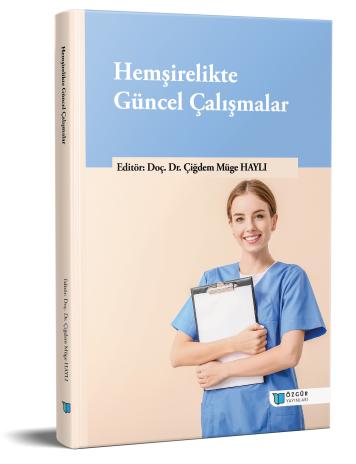
Evidence-Based Care Bundles and Nursing Practices in the Prevention of Ventilator-Associated Pneumonia
Chapter from the book:
Haylı,
Ç.
M.
(ed.)
2025.
Current Studies İn Nursing.
Synopsis
Ventilator-associated pneumonia is one of the most significant infections leading to increased mortality, morbidity, and healthcare costs in intensive care units, yet it is largely preventable through evidence-based care practices. This chapter presents up-to-date information on the definition, etiology, risk factors, and pathogenesis of ventilator-associated pneumonia, and provides a detailed explanation of the care bundle components that play a critical role in preventing the infection. Interventions such as proper head-of-bed elevation, effective oral hygiene, subglottic secretion drainage, cuff pressure management, careful monitoring of sedation, standardized suctioning techniques, stress ulcer prophylaxis, and appropriate use of ventilator circuits are introduced as effective practices that target the physiological mechanisms of ventilator-associated pneumonia.
The chapter also emphasizes nurses’ responsibilities in education, counseling, assessment, monitoring, and documentation processes, and supports the contributions of mentor-nurse models and simulation-based trainings in improving adherence to care practices with evidence from the literature. The holistic and interdisciplinary implementation of the ventilator-associated pneumonia care bundle significantly contributes to reducing infection rates, enhancing patient safety, and improving the quality of intensive care services.
In conclusion, nurses’ level of knowledge and adherence to evidence-based practices stand out as decisive factors in the prevention of ventilator-associated pneumonia.
Keywords:
How to cite this book
License

This work is licensed under a Creative Commons Attribution-NonCommercial 4.0 International License.
Published
DOI
Categories
Copyright (c) 2025 Çiğdem Müge Haylı; Elem Kocaçal- Burcu Ağdemir- Seçkin Karakuş- Ayşegül Erciyas- Gülcan Karabulut- Zeynep Daşıkan- Hanım Duru Yüce Başaran- Nazan Yıldız- Nihal Taşkıran- Süheyla Demirtaş Alpsalaz- Derya Öztürk Özen- Ümit Topcuoğlu