
An Evaluation of the Democratic Party Period (1946-1960) from the Perspective of Turkish Democracy History
Chapter from the book:
Göç,
E.
(ed.)
2025.
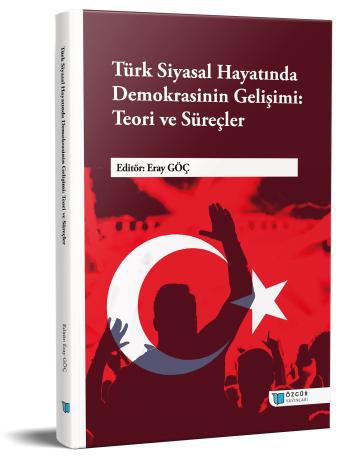
The Development of Democracy in Turkish Political Life: Theory and Processes .
Synopsis
The period between 1950 and 1960 encompasses a period in Turkish politics that deserves special attention, given the importance placed on democratic governance. This period encompasses a period of distinct developments not only from the perspective of the Democratic Party leadership, but also in terms of the transition to multi-party governance, central government and peripheral relations, the relationship between the command level and civilian administration, and the unprecedented nature of governance. In the Republic of Turkey, the state administration established after the Ottoman Empire, the reforms encompassing social life, and modernization projects under the Kemalist leadership led to revisionist transformations and developments in financial, political, and sociological structures. Globally, the Cold War, triggered by national competition, regional rivalries, and post-war economic and social developments dominated the landscape. This decade, encompassing 1950 and 1960, is a period in which we face the pain of the consequences of a new formation in Turkey and around the world. This period, encompassing the founding of the Republic and the beginning of the transition back to multi-party rule in 1950, represents a period in which a number of radical changes took place in both the social and political landscapes in Turkey, and modernism was driven by bureaucratic and military personnel. The authoritarian and totalitarian stance of a single political party controlling all the apparatus of government, the break with traditionalism, and the financial difficulties of the world war led to a backlash against the party's government from many segments of society. The intense public outcry in central-peripheral relations led to the Democrat Party, led by Menderes, winning power in the 1950 general elections. Adnan Menderes's political and sociological identity serves as a summary of this emerging period of power. Although Adnan Menderes continued his political life in the Republican People's Party, his ancestry from a wealthy family and his representation of Anatolian culture (tradition and spiritual values) all serve as a testament to the Democrat Party's rise to power. Menderes, who took over his family's farm, found himself unable to realize his farming dreams and found himself drawn into local politics. A prominent figure in his region, both personally and culturally, Menderes became an influential and influential political figure, first in the SCF and later in the Republican People's Party (CHP). While serving as the Aydın Provincial Chairman of the CHP, Gazi Mustafa Kemal Atatürk's visit to Aydın radically transformed Adnan Menderes's political life. Following Atatürk's recommendation to the CHP headquarters, Menderes entered Parliament as a Member of Parliament for Aydın in the 1931 general elections, marking another step in his unstoppable rise. Adnan Menderes's entry into political life and his rise to fame were entirely a consequence of the country's current circumstances. Adnan Menderes, who served as a Republican People's Party (CHP) Member of Parliament for Aydın between 1931 and 1945, avoided prominent positions for a long time. He first completed his unfinished education, took on undeniably important roles within the CHP party organization, and served on committees of the Grand National Assembly of Turkey for many years. Playing an active role in the establishment of the Democrat Party and during its opposition period, Menderes quickly rose to prominence, achieving his goals of party chairmanship and then prime ministership. He remained in power between 1950 and 1960, forming five governments. This period of power, debated from many perspectives in contemporary politics and sociology, represents a period marked by both gains and losses for the Republic of Turkey. In this context, the aforementioned 10 years are of great importance in terms of examining political, social, economic, and societal conditions. This work aims to analyze and examine Adnan Menderes's place in Turkish politics. While the political arena is frequently discussed due to the emergence of significant global developments and the political influence of the Democrat Party, the purpose of this study is to examine Adnan Menderes's place and significance in this process. The first section will examine the fundamental dynamics of Turkish politics and the conditions that paved the way for the Democrat Party's leadership, and various inferences will be presented. Furthermore, some details from the founding of the Democrat Party and Adnan Menderes's life will be revealed. The second section will examine Adnan Menderes's administrative activities, the governments he formed, and his political life until 1957. The third section will assess the situation after 1957, leading up to Adnan Menderes' execution.
Keywords:
How to cite this book
License

This work is licensed under a Creative Commons Attribution-NonCommercial 4.0 International License.
Published
DOI
Categories
Copyright (c) 2025 Önder Aytaç Afşar; Eray Göç; Muhammet Ali Demir- Fecri Yıldırım- Selçuk Kahraman- Murat Ercan- Muhammet Yasin Elitok