
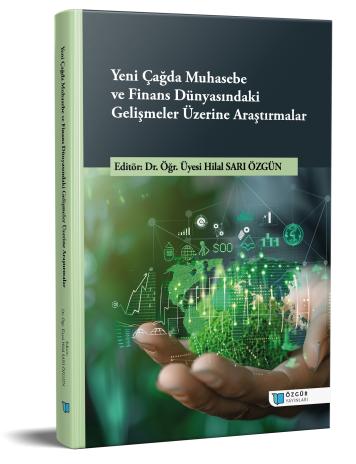
Digitalization in Forensic Accounting and Its Role in Fraud Detection
Chapter from the book:
Sarı Özgün,
H.
(ed.)
2025.
Research on Developments in The World of Accountıng and Fınance in The Modern Era .
Synopsis
Digitalization, like its impact on many professions, has also affected the field of forensic accounting, which is responsible for fraud examination. As a result of this impact, new techniques based on digital technologies have begun to replace traditional fraud detection methods. In this study, the concept of forensic accounting and accounting fraud are explained within a theoretical framework. Subsequently, technology-based techniques used by forensic accountants in the fraud detection process are discussed. One of these techniques is data analytics, which is supported by specialized software and widely used by forensic accountants. Another technique, machine learning, has the capability to identify anomalies that cannot be detected through traditional fraud detection methods. Deep learning, on the other hand, is capable of distinguishing complex patterns within financial data. Blockchain-based smart contracts aim to detect and prevent fraud by establishing standardized controls within financial systems. In conclusion, under the influence of the digital age, forensic accountants increasingly utilize technological methods in the detection of fraud.
How to cite this book
License

This work is licensed under a Creative Commons Attribution-NonCommercial 4.0 International License.
Published
DOI
Categories
Copyright (c) 2025 Hilal Sarı Özgün; İsmail Atabay- Funda Karakoyun- Fatma Çıtak- İlker Sakınç- S. Öznur Sakınç- Sema Bacak- Saime Doğan- Aslı Keskin- Aysel Güney