
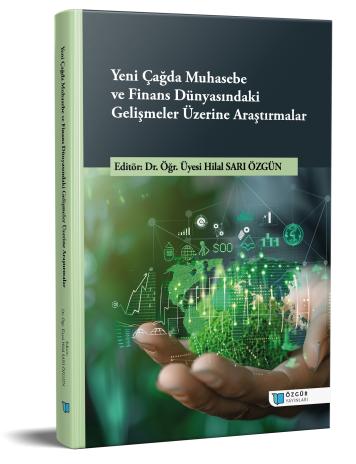
Green Accounting in the Tourism Sector and Examples of Its Application
Chapter from the book:
Sarı Özgün,
H.
(ed.)
2025.
Research on Developments in The World of Accountıng and Fınance in The Modern Era .
Synopsis
Green accounting can be defined as the process of identifying, measuring and reporting the environmental costs undertaken by businesses to minimise the damage they cause to the environment as a result of their activities and to protect the environment. The present study aims to explore the importance and impact of green accounting practices within the tourism industry, where such practices are becoming increasingly critical for achieving environmental sustainability goals. Accordingly, the study initially focuses on the fundamental tenets of green accounting, including the identification and reporting of environmental costs, and subsequently incorporates the accounting records of green accounting practices. The implementation of green accounting practices within the tourism sector is recognised as an important strategy for achieving environmental sustainability goals. The integration of green accounting practices within business enterprises has the potential to yield favourable outcomes from both an environmental and an economic perspective. Ultimately, this study serves to guide businesses in the tourism sector in the implementation and development of green accounting practices.
How to cite this book
License

This work is licensed under a Creative Commons Attribution-NonCommercial 4.0 International License.
Published
DOI
Categories
Copyright (c) 2025 Hilal Sarı Özgün; İsmail Atabay- Funda Karakoyun- Fatma Çıtak- İlker Sakınç- S. Öznur Sakınç- Sema Bacak- Saime Doğan- Aslı Keskin- Aysel Güney