
A Theoretical Reading on Emotional Communication in the Artistic and Psychological Layers of Colours
Chapter from the book:
Tanrıverdi,
Y.
(ed.)
2025.
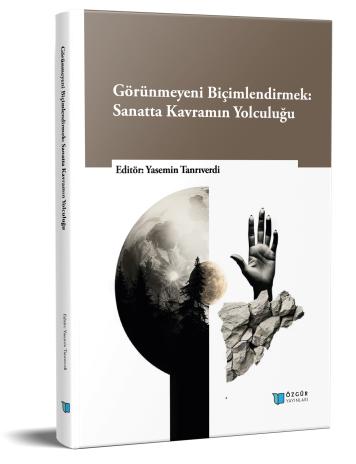
Shaping the Invisible: The Journey of Concept in Art.
Synopsis
Colours are regarded not only as aesthetic elements that appeal to visual perception, but also as multidimensional indicators that generate meaning, direct emotions, and shape communication between individuals and their environment. In contemporary societies where visual culture is concentrated, it is emphasised that the effect of colour on perception, emotion, and behaviour is becoming increasingly apparent. This study examines the role colours play in emotional communication through artistic, psychological, and cultural layers within a theoretical framework. It evaluates colours as symbolic systems shaped by social and cultural codes in line with semiotic approaches and demonstrates that colours are non-linguistic but meaningful communication tools, based on the views of theorists such as Barthes, Kress, and Van Leeuwen. In addition, the psychological effects of colours are examined in the context of evolutionary, cognitive, and cultural approaches, stating that colour perception varies depending on individual experiences, cultural differences, and environmental conditions. The study, which also focuses on the functions of colours in various disciplines such as advertising, marketing, education, health, digital media, art, and design, examines the decisive role of colours in processes of emotional guidance, persuasion, meaning production, and identity construction within an analytical framework. Consequently, this study highlights that colours transcend individual perception to become a powerful emotional communication tool in psychological, cultural, and communicative contexts, concluding that conscious colour usage enhances communicative impact.
How to cite this book
License

This work is licensed under a Creative Commons Attribution-NonCommercial 4.0 International License.
Published
DOI
Categories
Copyright (c) 2025 Yasemin Tanrıverdi; Seyit Mehmet Buçukoğlu- Sefa Ersan Kaya- Gültekin Akengin- Asuman Aypek Arslan- Tuba Batu- Ece Yücel- Şule Sayan- A. Sultan Karaoğlu- Arzu Parten Altuncu- Emine Jessica McKIE