
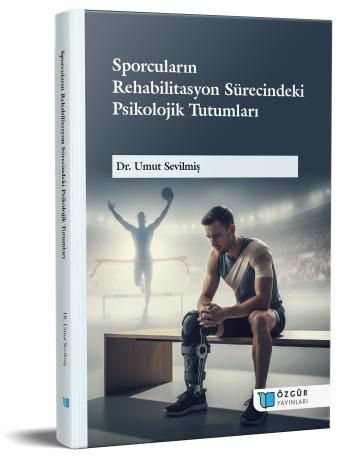
Psychological Attitudes of Athletes During Rehabilitation
Synopsis
Sports injuries constitute a multidimensional challenge that affects not only athletes’ physical capacity but also performance, career continuity, and psychosocial well-being. This book aims to provide an integrated overview of injury classification and etiological factors and to examine athletes’ psychological responses during rehabilitation and how these responses influence recovery outcomes. The content addresses acute and cumulative injuries, severity-based classification, and intrinsic/extrinsic risk factors, emphasizing that rehabilitation should not be reduced to tissue repair alone. The book highlights that rehabilitation success is closely related to psychological variables such as motivation, self-efficacy, and return-to-sport anxiety, while processes like identity loss and fear of re-injury (kinesiophobia) may undermine adherence to rehabilitation protocols. In conclusion, effective rehabilitation is framed within a biopsychosocial perspective, requiring coordinated medical care, physiotherapy, and psychological support; moreover, mental readiness and optimized social support are underscored as key factors in the return-to-sport phase.
How to cite this book
License

This work is licensed under a Creative Commons Attribution-NonCommercial 4.0 International License.
Published
ISBN
DOI
Statistics
Categories
Copyright (c) 2026 Umut Sevilmiş; Filiz Fatma Çolakoğlu