
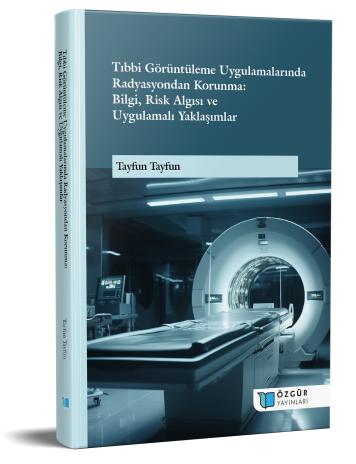
Radiation Protection in Medical Imaging Applications: Knowledge, Risk Perception, and Practical Approaches
Synopsis
This study addresses radiation protection in medical imaging applications by examining the roles of knowledge level and radiation risk perception within a conceptual and applied framework. The widespread use of ionizing radiation in diagnostic and therapeutic procedures provides significant clinical benefits; however, its biological effects and potential risks necessitate an effective and sustainable safety approach. Although radiation protection is defined by international standards and regulatory frameworks, it is emphasized that technical measures alone are not sufficient. The effectiveness of protection practices largely depends on individuals’ levels of knowledge, awareness, and attitudes. In this context, radiation protection knowledge is considered not only a technical competence but also a fundamental determinant of safe and responsible behaviors.
Radiation risk perception is a multidimensional phenomenon that explains how individuals interpret this invisible hazard and develop corresponding behaviors. The literature indicates that due to the invisible and abstract nature of radiation, the delayed manifestation of its effects, and the lasting impact of past nuclear accidents on collective memory, significant discrepancies may arise between perceived risk and scientifically defined risk levels. Studies demonstrate that risk perception is shaped by psychological, educational, and experiential factors. Insufficient knowledge may lead to exaggerated risk perception and increased anxiety, whereas excessive confidence may result in the underestimation of risk and the neglect of protective measures. Conversely, accurate and adequate education is frequently emphasized as a key factor in promoting a more balanced and realistic perception of radiation-related risks.
This study approaches the subject in a comprehensive manner, starting from its conceptual foundations. The definition and classification of radiation, its applications in medical imaging, the biological effects of radiation, and the fundamental principles of radiation protection and international safety standards are examined within an integrated framework. Beyond this technical perspective, the study also explores the formation of radiation risk perception. In the context of Türkiye, the current structure of radiation education and the implications of knowledge and awareness levels among healthcare professionals and students for radiation protection practices and risk perception are discussed. By emphasizing that radiation safety should be supported not only by technical and legal regulations but also by educational, communicative, and human factors, this study offers a conceptual and applied perspective on safe radiation use in medical imaging applications.
How to cite this book
License

This work is licensed under a Creative Commons Attribution-NonCommercial 4.0 International License.
Published
ISBN
DOI
Statistics
Categories
Copyright (c) 2026 Tayfun Tayfun