
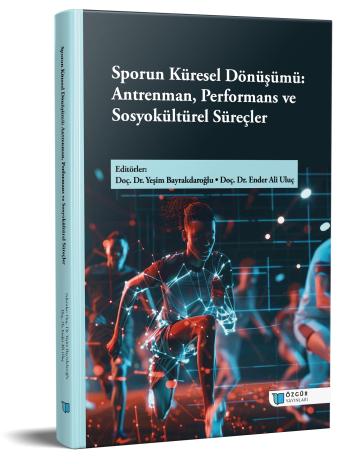
Digital Fatigue and Sports
Chapter from the book:
Bayrakdaroğlu,
Y.
&
Uluç,
E.
A.
(eds.)
2026.
The Global Transformation of Sport: Training, Performance, and Sociocultural Processes.
Synopsis
The intensive and continuous use of digital technologies in daily life has rendered the phenomenon of “digital fatigue” more prominent, as it is associated with increased cognitive load, sleep disturbances, and psychological exhaustion. From a sports sciences perspective, digital fatigue is conceptualized as a multidimensional risk factor that may exert direct or indirect effects on performance sustainability, recovery quality, mental resilience, and overall health indicators. In this book chapter, the concept of digital fatigue is explained within its theoretical foundations, and its potential physical, cognitive, and psychosocial effects on athletes and sedentary individuals are discussed based on the existing literature. Within this framework, the core components of digital fatigue—namely digital addiction, psychological fatigue, physical and mental fatigue, and psychosomatic problems—are examined through a holistic approach. Findings in the literature indicate that uncontrolled and prolonged digital use may negatively affect sleep quality and recovery processes in athletes and may lead to fluctuations in focus, decision-making, and performance continuity through increased mental load and stress levels. In sedentary individuals, excessive screen time combined with physical inactivity appears to deepen the cycle of fatigue. Accordingly, the development of digital awareness practices in sports settings and the establishment of digital usage plans aligned with training–recovery processes may provide significant contributions to maintaining performance and promoting health.
How to cite this book
License

This work is licensed under a Creative Commons Attribution-NonCommercial 4.0 International License.
Published
DOI
Categories
Copyright (c) 2026 Yeşim Bayrakdaroğlu- Ender Ali Uluç; Büşra Çetin- Canan Kışlalıoğlu- Ebru Karakuş- Kaan Karakuş- Emrah Barkın- Mehmet Bilgin Karademir-Yasin Yıldız