
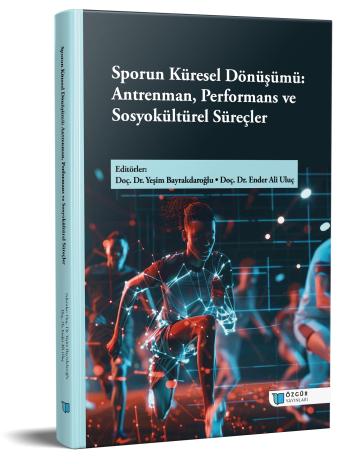
Help-Seeking Behavior in Athletes: A Theoretical Review
Chapter from the book:
Bayrakdaroğlu,
Y.
&
Uluç,
E.
A.
(eds.)
2026.
The Global Transformation of Sport: Training, Performance, and Sociocultural Processes.
Synopsis
Help-seeking behavior in athletes is a critical determinant for the early identification of mental health difficulties and the initiation of effective intervention processes. Competitive sport environments expose athletes to unique stressors such as performance pressure, injuries, role conflicts, and social evaluation concerns, all of which may threaten psychological well-being. However, dominant sport culture norms emphasizing “mental toughness” frequently frame help-seeking as a sign of weakness. This perception strengthens both self-stigma and public stigma mechanisms, particularly among male athletes, thereby delaying or inhibiting professional support utilization.
This chapter examines help-seeking behavior through an integrative theoretical lens, drawing on the Theory of Planned Behavior, Rickwood’s Help-Seeking Process Model, stigma-based frameworks, and Purcell’s Mental Health in Sport Framework. Help-seeking is conceptualized not as a singular behavioral decision but as a multidimensional construct shaped by attitudes, subjective norms, perceived behavioral control, process-based cognitive stages, and structural accessibility factors. The chapter further analyzes how clinical presentations—including depression, anxiety, burnout, post-injury psychological responses, and eating disorders—interact with these theoretical mechanisms and influence help-seeking trajectories in distinct ways.
The findings suggest that strengthening help-seeking behavior in athletes requires more than individual-level awareness interventions. Comprehensive, ecosystem-based strategies incorporating stigma reduction programs, coach education, and confidentiality-oriented institutional policies are essential. The integration of theoretical models and multi-layered intervention approaches is fundamental to promoting sustainable mental health support systems within sport contexts and ensuring both athlete well-being and long-term performance continuity.
How to cite this book
License

This work is licensed under a Creative Commons Attribution-NonCommercial 4.0 International License.
Published
DOI
Categories
Copyright (c) 2026 Yeşim Bayrakdaroğlu- Ender Ali Uluç; Büşra Çetin- Canan Kışlalıoğlu- Ebru Karakuş- Kaan Karakuş- Emrah Barkın- Mehmet Bilgin Karademir-Yasin Yıldız