
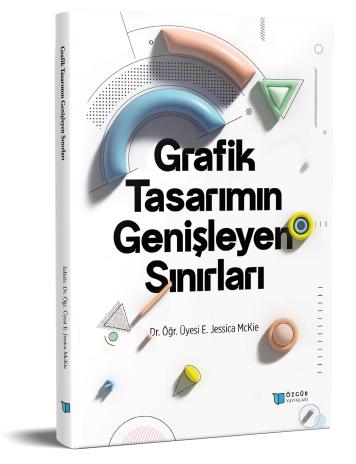
Gamified Advertising Design: A Model Proposal Based on Motivation Theories and Visual Persuasion Strategies
Chapter from the book:
Mckie,
E.
J.
(ed.)
2026.
Expanding Frontiers of Graphic Design.
Synopsis
This study examines gamification in advertising graphics from a design-centric perspective, positioning it not as a decorative marketing tactic but as a structured motivational and rhetorical system. Drawing on Self-Determination Theory (SDT), Flow Theory, and Chou's Octalysis framework, the study establishes a theoretical foundation for understanding how game mechanics influence autonomy, competence, relationality, engagement continuity, and motivational drives in branded environments. It argues that gamified advertising operates as a ludo-persuasive interface where visual hierarchy, feedback systems, motion design, and social mechanics function as communicative tools shaping user behavior and brand perception. Based on this conceptual integration, the study proposes an application-oriented design framework that translates psychological constructs into actionable graphic strategies. The model outlines sequential stages including behavioral goal definition, motivational mapping, engagement cycle creation, mechanical visualization, ethical calibration, and empirical evaluation. Particular emphasis is placed on design that supports transparency, proportionality, and autonomy as conditions for sustainable brand relationships. This study presents a responsible and design-oriented approach to gamified advertising that positions the designer as an intermediary between motivation theory and visual rhetoric, aligning persuasive effectiveness with ethical responsibility and brand consistency.
How to cite this book
License

This work is licensed under a Creative Commons Attribution-NonCommercial 4.0 International License.
Published
DOI
Categories
Copyright (c) 2026 E. Jessica Mckie; Seyit Mehmet Buçukoğlu- E. Jessica Mckie- Mesut Usta- Erkan Özkarakaş- Onur Şahin Karakuş- Zeynep Dağlı Curalı