
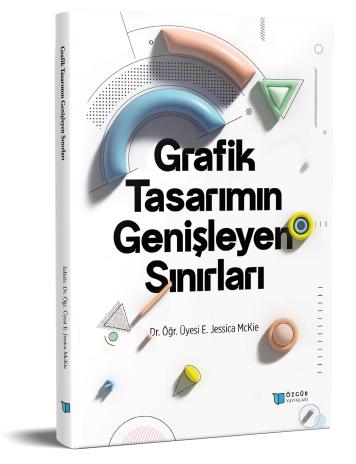
Graphic Design in Augmented Reality: Urban Layered Narratives and Wayfinding
Chapter from the book:
Mckie,
E.
J.
(ed.)
2026.
Expanding Frontiers of Graphic Design.
Synopsis
This chapter examines the transition of the graphic design discipline from traditional two-dimensional surfaces to urban space within the context of Augmented Reality technologies. The study discusses how the city evolves from a mere physical structure into a dataspace and a digital palimpsest layered with data, drawing upon the theories of Lev Manovich and Kevin Lynch. The first focal point is the transformation of urban wayfinding systems; it investigates how the cognitive load created by traditional maps is overcome through situated graphic interfaces (WUI) embedded in physical space. The second focus is the layered narratives generated in the city via locative media. The revitalization of historical and cultural memory in space through AR interfaces reveals the diegetic and experiential dimension of design. Ultimately, this study redefines the changing ontological role of the designer amidst visual clutter and data saturation; rather than a mere aesthetic producer, the designer is repositioned as an interface architect who guides the urban experience in the age of spatial computing.
How to cite this book
License

This work is licensed under a Creative Commons Attribution-NonCommercial 4.0 International License.
Published
DOI
Categories
Copyright (c) 2026 E. Jessica Mckie; Seyit Mehmet Buçukoğlu- E. Jessica Mckie- Mesut Usta- Erkan Özkarakaş- Onur Şahin Karakuş- Zeynep Dağlı Curalı