
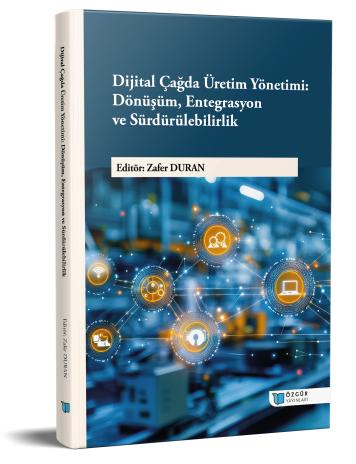
Digital Transformation in the Supply Chain: Efficiency, Traceability, Reliability, and Sustainability
Chapter from the book:
Duran,
Z.
(ed.)
2026.
Production Management in the Digital Age: Transformation, Integration, and Sustainability.
Synopsis
The use of technology in supply chain management has emerged as a practice that supports the organization and scope of the supply chain. This study aims to examine the existing tools designed to meet the needs of modern supply chains and to demonstrate how the integration of technology as an indispensable part of these processes enables supply chains to operate more efficiently and successfully. The role of technology in supply chain management helps reduce costs and improve performance across various domains, ranging from logistics and customer services to warehouse management and supplier collaboration. The key to integrating technology into supply management and logistics application development processes lies in enhanced visibility and transparency, which enables real-time tracking of goods and materials. These advanced insights, which allow businesses to make changes in their processes and optimize their operations, contribute to the early identification of potential bottlenecks and inefficiencies. Supply Chain Management (SCM) focuses on security, confidentiality, traceability, transparency, data accuracy, privacy, efficiency, accountability, and trust — all of which have been significantly enhanced by digital technologies. Growing globalization and competition have driven companies to embrace digitalization, with the Internet of Things (IoT), artificial intelligence, blockchain, big data analytics, and robotic systems enabling supply chains to become more agile and efficient. This study highlights the benefits that technological transformation can offer through a literature review. The findings indicate that digital technologies have become a strategic necessity for sustainable supply chain management.
How to cite this book
License

This work is licensed under a Creative Commons Attribution-NonCommercial 4.0 International License.
Published
DOI
Categories
Copyright (c) 2026 Ramazan Eyüp Gergin; Zafer Duran; Yasemin Karabulut- Fuat Karamahmutoğlu- Hakan Ezici- Mert Anıl Sarıcan- Muhammed Parlak