
The Transformation of Meaning into Form: Typography
Chapter from the book:
Tanrıverdi,
Y.
(ed.)
2026.
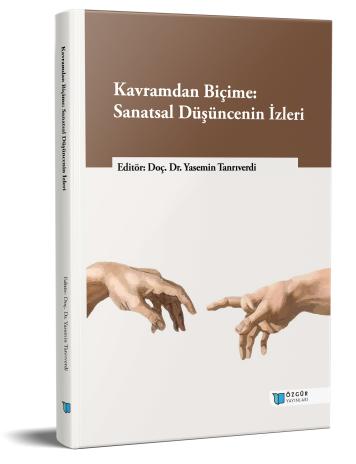
From Concept to Form: Traces of Artistic Thought.
Synopsis
This study argues that typography is not merely a technical tool that makes text visible; it is a field of meaning production where thought, culture, and ideology are visually constructed through letter form. Typographic form, through elements such as thickness, rhythm, spacing, and position within the composition, determines not only the reading process but also the way the text is perceived and interpreted. The study examines the relationship between writing and typography from a semiotic perspective, revealing that the letter functions not only as a visual representation of sound but also as a "sign" capable of carrying atmosphere, ideological orientation, and cultural memory. Within this framework, the historical transformation of typography is traced alongside ruptures in the history of thought: while the rational production logic of the Industrial Revolution strengthened order, clarity, and standardization in modernist typography, Bauhaus and New Typography institutionalized the visual language of this understanding. In the last quarter of the 20th century, the postmodern approach questioned the claims of neutrality and objectivity of modernism, transforming the letter into an experimental field of expression. This transformation is concretized through the work of David Carson: Carson removes readability from being an absolute value, making visible the imagistic and experiential potential of typography; Thus, typography evolves from a system that transmits information to a visual language that carries cultural atmosphere and intellectual tension. Consequently, this study examines typography not merely as a formal developmental trajectory, but as a visual representation of different modes of thinking in each era, placing it as an active subject in the production of cultural meaning.
How to cite this book
License

This work is licensed under a Creative Commons Attribution-NonCommercial 4.0 International License.
Published
DOI
Categories
Copyright (c) 2026 Yasemin Tanrıverdi; Arzu Parten Altuncu- Yıldız Örücü- Emel Güray- Ekrem Altuncu- Metin Coşkun- Lütfiye Tatar- Abdülkadir Dündar