
Theoretical Limits of Machine Learning under Noisy and Limited Data
Chapter from the book:
Başar,
Ü.
&
Öztürk,
İ.
(eds.)
2026.
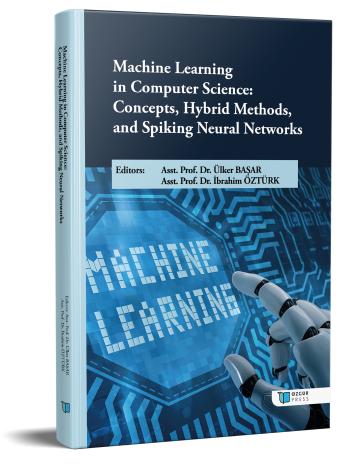
Machine Learning in Computer Science: Concepts, Hybrid Methods, and Spiking Neural Networks.
Synopsis
Machine learning has achieved remarkable success across many scientific and engineering domains. However, the increasing reliance on data driven methods has also raised important questions regarding the theoretical limits of learning systems operating under noisy and limited data conditions. While modern algorithms often demonstrate impressive predictive performance, their reliability depends strongly on the statistical assumptions and structural properties of the data used during training.
This chapter examines the fundamental limitations of machine learning when observations are affected by measurement noise, limited sample size, and violations of classical statistical assumptions. Particular attention is given to the physical and mathematical structure of noise, including electronic fluctuations, quantization effects, drift phenomena, and heavy tailed variability. These characteristics challenge simplified modeling assumptions frequently adopted in machine learning, such as independent and identically distributed observations or Gaussian noise structures.
The discussion further explores how noise and data scarcity influence generalization behavior. Highly flexible models may achieve low training error while memorizing noise rather than learning meaningful signal patterns. Such phenomena highlight the importance of understanding the interaction between model complexity, data availability, and uncertainty in the data generating process. In addition, the chapter analyzes potential risks associated with simulation based data augmentation and the generation of synthetic datasets. When the statistical structure of simulated data does not accurately reflect the underlying system, models may learn artifacts of the simulation process instead of genuine physical relationships.
Finally, the role of physical priors and domain knowledge in stabilizing learning systems is discussed. Incorporating structural constraints derived from known physical principles can reduce the effective hypothesis space and improve robustness in noisy environments. From this perspective, machine learning should be viewed not as a universal replacement for theoretical modeling, but as a complementary tool within a broader scientific methodology.
How to cite this book
License

This work is licensed under a Creative Commons Attribution-NonCommercial 4.0 International License.
Published
DOI
Categories
Copyright (c) 2026 Ülker Başar- İbrahim Öztürk; Yousef Farhang- Ülker Başar- Gökhan Halimoğlu- İbrahim Öztürk- David M. Halliday- Nigar Tuğbagül Altan Gülgün- Havva Gül Koçer- Birkan Büyükarıkan- Esin Ayşe Zaimoğlu